Showing posts with label how to reduce body fat naturally. Show all posts

Saturday, April 23, 2016

How to Lose Fat When Your Body Fat Percentage Is Over 50 Percent


Weight loss requires willpower and dedication, but if you have a lot of weight to lose, it's especially daunting. When your body fat percentage is over 50 percent, you're likely looking at months or possibly years of work to get the physique you want, depending on how much weight loss you plan to achieve. However, you'll likely see noticeable results within the first two months, which can motivate you to keep going. Talk to your doctor before you start on your weight-loss and fitness journey; she can offer guidance to address any underlying health conditions to keep you safe as you get fit and lose body fat.

Starting Your Fat Loss Journey


Exactly how much fat you need to lose depends on your current weight. If you're currently considerably overweight or obese, you should aim for significant weight loss; if you're not significantly overweight, but have a high body fat percentage, aim for a smaller weight loss to help improve your body composition. Your target body fat percentage varies depending on your age and gender; women should generally aim for 16 to 31 percent, while men should try for 10 to 22 percent.

To lose fat, you need to burn more calories than you take in from food and drinks so that your body will release and burn fat to make up the difference. Aim for a loss of 1 to 2 pounds per week, which you can achieve by cutting 500 to 1,000 calories from your daily diet. Following a healthy diet and exercise program, you should be able to lose about 1 percent of your body fat each month, according to the American Council on Exercise.

Use an online calculator to estimate your daily calorie needs, so you can subtract the 500 to 1,000 calories for weight loss. Keep in mind, though, that an online calculator just provides a calorie burn estimate based on your age, gender and size, and it doesn't take into account your body composition. Because fat burns fewer calories than muscle, and you have a higher-than-average proportion of fat, an online calculator might overestimate your calorie needs. Use the calorie target from an online calculator as a starting point, but expect to adjust your calorie intake slightly as you progress until you find an intake that allows you to lose 1 to 2 pounds weekly.

Lowering Body Fat Percentage With Diet


You'll see the fastest results -- and achieve a healthier body composition -- if you adjust your diet to promote fat loss and retain muscle tissue. Make sure you're eating plenty of protein, which provides the amino acids you need to repair and build new muscle tissue. Plus, including protein in your meals also makes them more filling, so you'll feel satisfied even on a calorie-restricted diet. A mix of lean meats, nuts and seeds, dairy and eggs, lentils and beans, and fatty fish supply beneficial protein to help you shed fat. Round out the rest of your diet with whole grains, healthy fats -- like olive oil, flaxseed and avocado -- and fruits and veggies.

Experiment with different flavors on your fat loss journey, so you can find a selection of healthy recipes you truly enjoy. Hitting your calorie target -- not micromanaging your carb, fat and protein intakes -- is the most important aspect of fat loss, according to a study published in the American Journal of Clinical Nutrition. The study authors looked at the effects of four different types of calorie-restricted diets -- each with different proportions of fat, protein and carbohydrates -- and found they were all equally effective for weight loss. Ultimately, you'll get better results if you find a healthy diet you can stick to, rather than feeling forced into a diet you dislike and eventually give up.

Increase Your Fat Burn With Cardio


Getting more activity is key for fat loss -- heart-pumping aerobics increase your calorie demands for the day, and each workout will help you melt away fat. Find a few aerobics you enjoy -- for example, water aerobics, rowing, elliptical, brisk walking or running -- and cycle through your favorite activities throughout the week to avoid boredom.

If you're working out on a cardio machine, like an elliptical, don't feel obligated to stay in the "fat-burning" heart rate zone, which usually requires that you work at a low intensity. You'll actually burn more calories if you push yourself to work out at a moderate or vigorous intensity, which ultimately burns more fat and calories than staying in the fat-burning zone.

Improve Body Composition With Strength Training


Incorporating strength training into your routine also helps you lose fat. Strength training builds muscle -- a highly metabolically-active type of tissue -- so you're able to burn more calories throughout the day. It also helps you retain muscle as you lose fat, which will help ensure you're at a healthy body fat percentage when you hit your goal weight.

Schedule strength-training workouts into your routine twice or three times weekly, and make each session a full-body workout. Consider hiring a professional to conduct a fitness assessment and design a program for you. At a higher-than-average body fat percentage, some exercises might be especially difficult and require modification, at least until you get stronger and lose some body fat. A personalized program will get you the fastest results with the least risk of injury.

source by : http://www.livestrong.com/article/429085-what-is-the-fastest-way-to-lose-body-fat-when-your-body-is-50-percent-fat/


Friday, April 15, 2016

10 Tricks to Lose Weight Just Sitting at Your Desk

Set a timer to get up every 20 minutes or so

ISTOCK/LAFLOR
You’ve heard this tip before, but it’s worth repeating. Simply standing up more often helps to prevent weight gain versus sitting. We expend a surprising number of calories through non-exercise activity thermogenesis (NEAT)—activities like walking to the water cooler, vacuuming, and even toe tapping and fidgeting. This incidental movement can help with fat loss, say The Nutrition Twins, Lyssie Lakatos, RDN, and Tammy Lakatos Shames, RDN. Obese people tend to sit 2.5 hours a day more than their sedentary lean counterparts, research shows. Some fitness bands not only track your steps, but they’ll remind you if you’ve been inactive for a certain period of time. You can set a quiet vibration timer on your phone or a desktop one with your sound turned off (like e.ggtimer.com) that’ll remind you to get up and take a loop around the office. Here are tricks to make your walking routine even healthier.


Toss out junky snacks


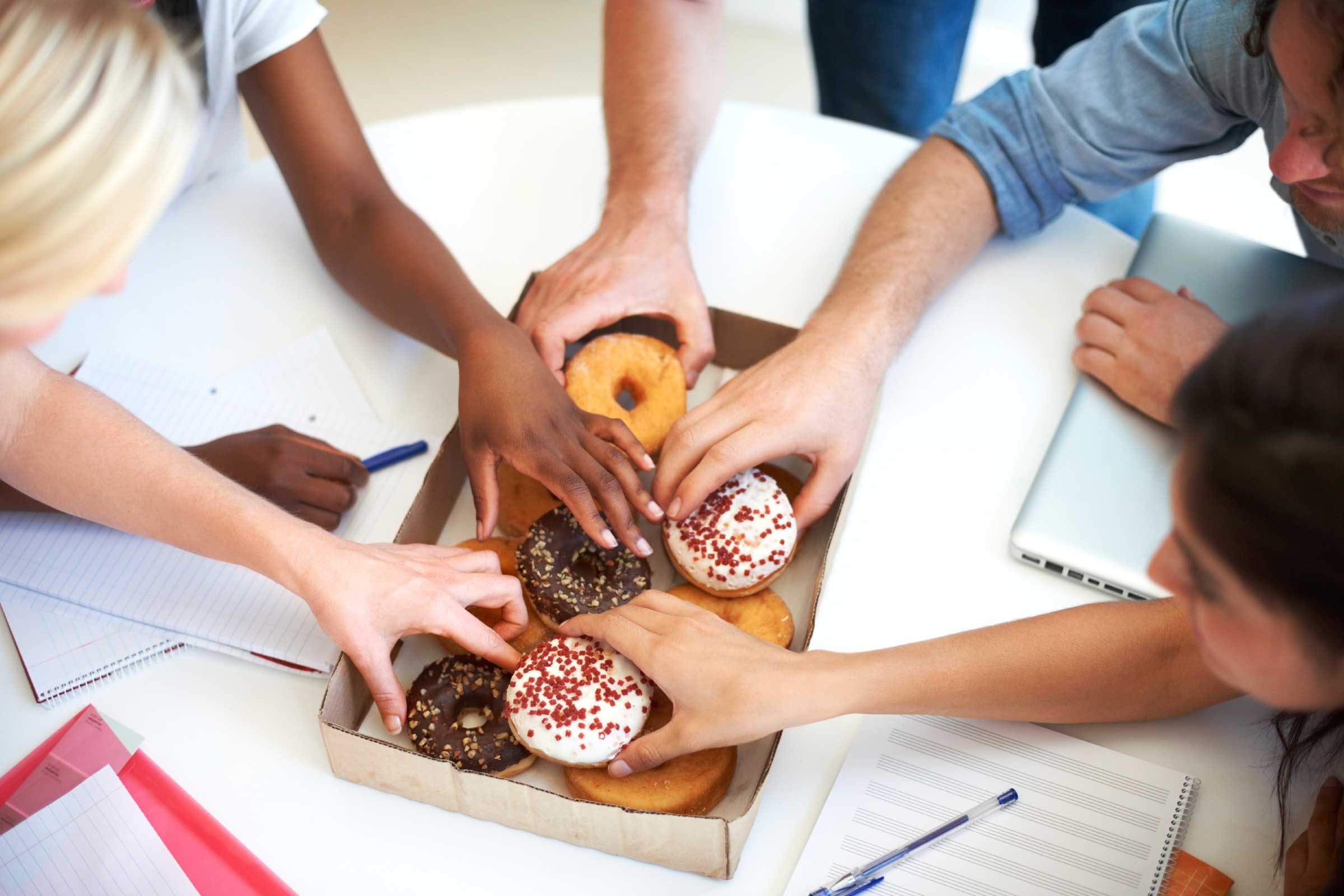
Rid your desk of those “emergency” sweets, suggests Lakatos Shames. Out of sight, out of mind. When you’re not surrounded by temptations, it’s much easier to stay away from foods that can lead to weight gain.

Stock up on healthy snacks


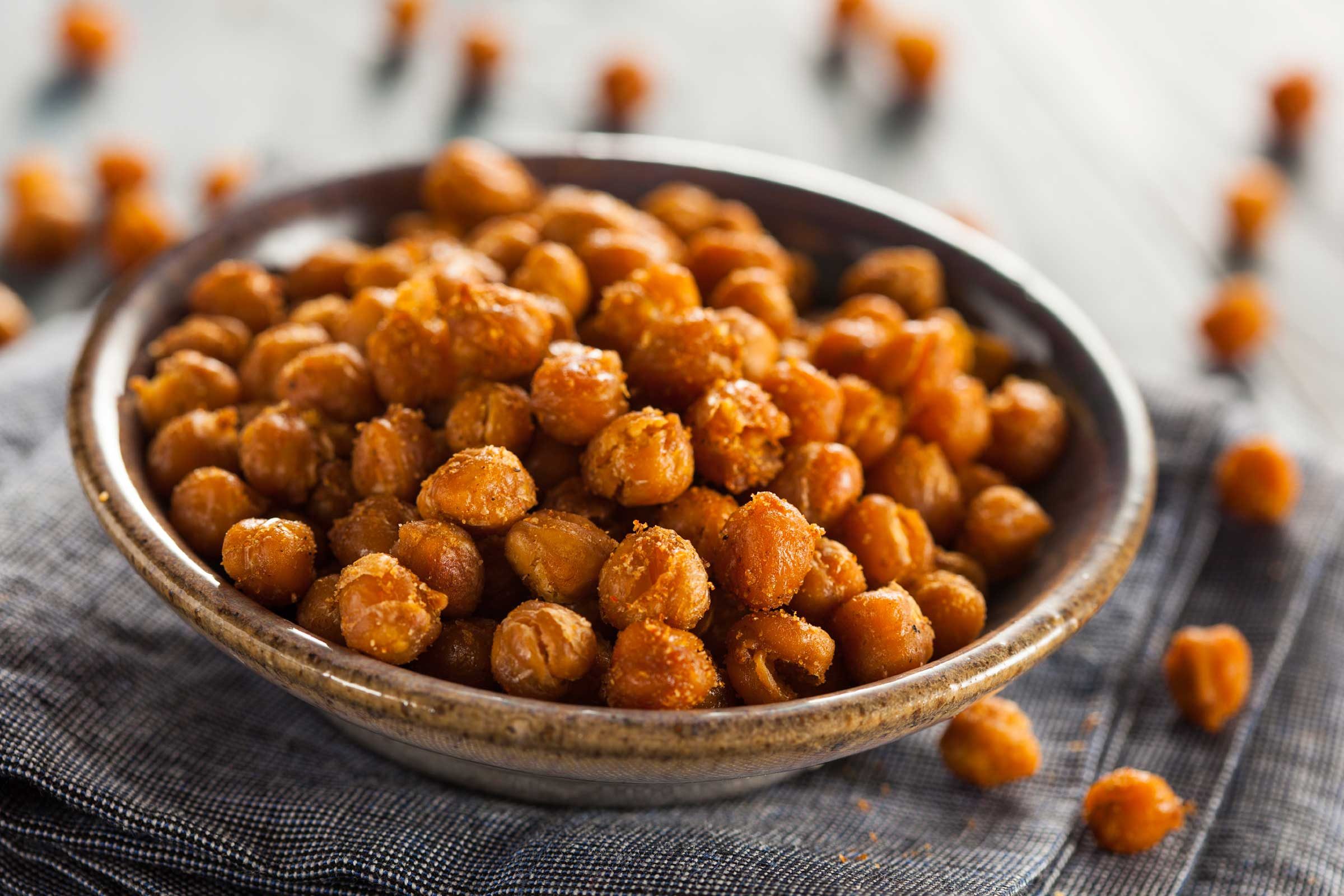
We’ve all had those days where a meeting runs way too long and you don’t have time to grab lunch. Your best bet to prevent a “hangry” (hunger + angry) episode: Rely on fiber-filled, protein-packed snacks that will keep you satisfied on relatively few calories, suggests Lakatos. Keep non-perishable snacks in your office drawer, like pre-portioned nut packs, or lower-sugar granola bars like KIND bars, roasted chickpeas, whole grain crackers, and even a small jar of peanut butter or almond butter. If you have access to an office fridge, stash these nutritious foods: apples, edamame, black bean dip or hummus for your crackers, non-fat yogurt topped with one tablespoon of granola, cucumber slices with low-fat cottage cheese, and raw, sliced veggies like carrots, peppers, and celery. We love these 31 healthy snacks for adults.

Drink plenty of naturally flavored water 


Flatten your belly by sipping water infusions throughout the day. The extra flavor will help if you’re sick of plain water and the combination of water and potassium from the fruit/herb/veggie infusions can help flush bloating culprits (like salt) from your system. Consider buying an infuser water bottle for your desk to which you add fruit or fresh herbs (find some on Amazon, Walmart, or Bed Bath & Beyond, to name a few). “When you’re properly hydrated you won’t make the common mistake of confusing thirst for hunger,” says Lakatos. “The extra fluid in your stomach can keep you feeling full.” The Nutrition Twins have a few favorite infusion recipes from their website: including Cucumber-Blueberry Water (8 ounces water, ¼ cup blueberries, ¼ cucumber, sliced), or their Lemon and Mint Detox Infusion that you can sip warm or cool (1 teaspoon grated ginger, slice up one lemon, several mint leaves, pour over 8 or 12 ounces water). These sneaky signs of dehydration mean you need to drink up.
Sip tea with lunch

Sip tea with lunch


Green, black, and oolong tea contain the amino acid theanine, which brings on a state of mental calmness yet alertness. This may help ease anxiety and prevent overeating due to emotional stress, while also making you very alert and mindful of your food choices. When you make good, healthy, rational meal decisions you stay leaner. These health benefits of tea are pretty mind-blowing.

Desk exercise: Zip up your abs


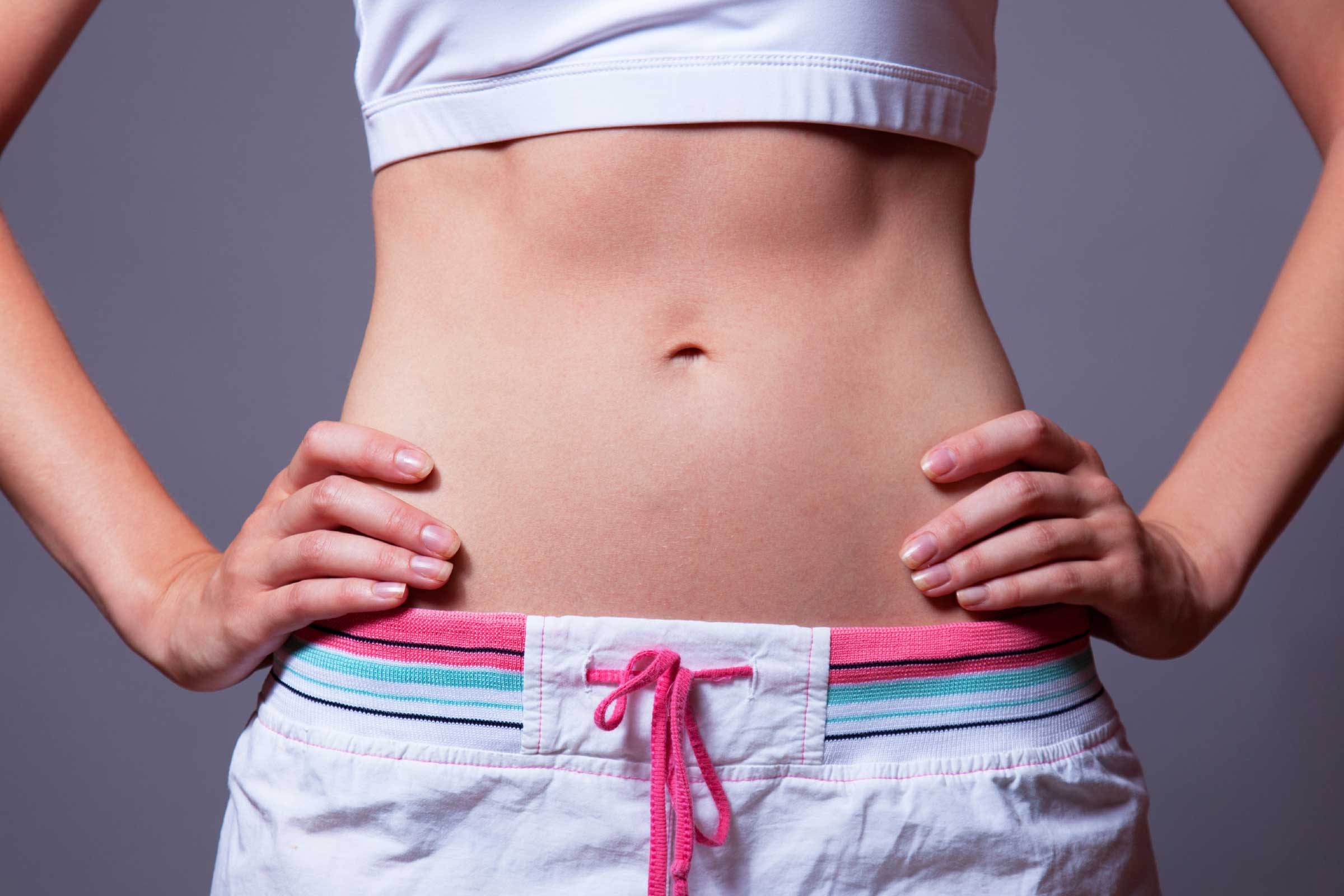
“We rely on this and it truly makes a huge flat-belly difference,” says Lakatos. Activate your abs by squeezing them in tight and pulling them back against your spine as you exhale. Picture zipping your abs together by using your muscles to contract your abs by pulling in from the center—think about pulling everything in a vertical line from your belly button up to between your breastbone, while also holding everything in and back toward your spine. Hold for a count of 10 as you continue to exhale. Slowly release and repeat for 10 reps at least three times. “Not only will this create good posture, it will also wake up the abs muscles and make it easier to keep your abs in,” says Lakatos Shames. Bonus: When you’re focusing on flat abs and a tight stomach you’re less likely to overeat at your desk. Here are 12 reasons your belly might be bloated.

Desk exercise: Tone your thighs


Try this thigh-toning exercise under your desk. (Beware wires and remove clutter first!) Stay seated with your feet on floor and back straight. Extend your right leg until it’s level with your hip, slowly lower. Repeat 10-15 times. Switch legs. You’ll feel the burn in your quadriceps.

Desk exercise: Strengthen your calves 


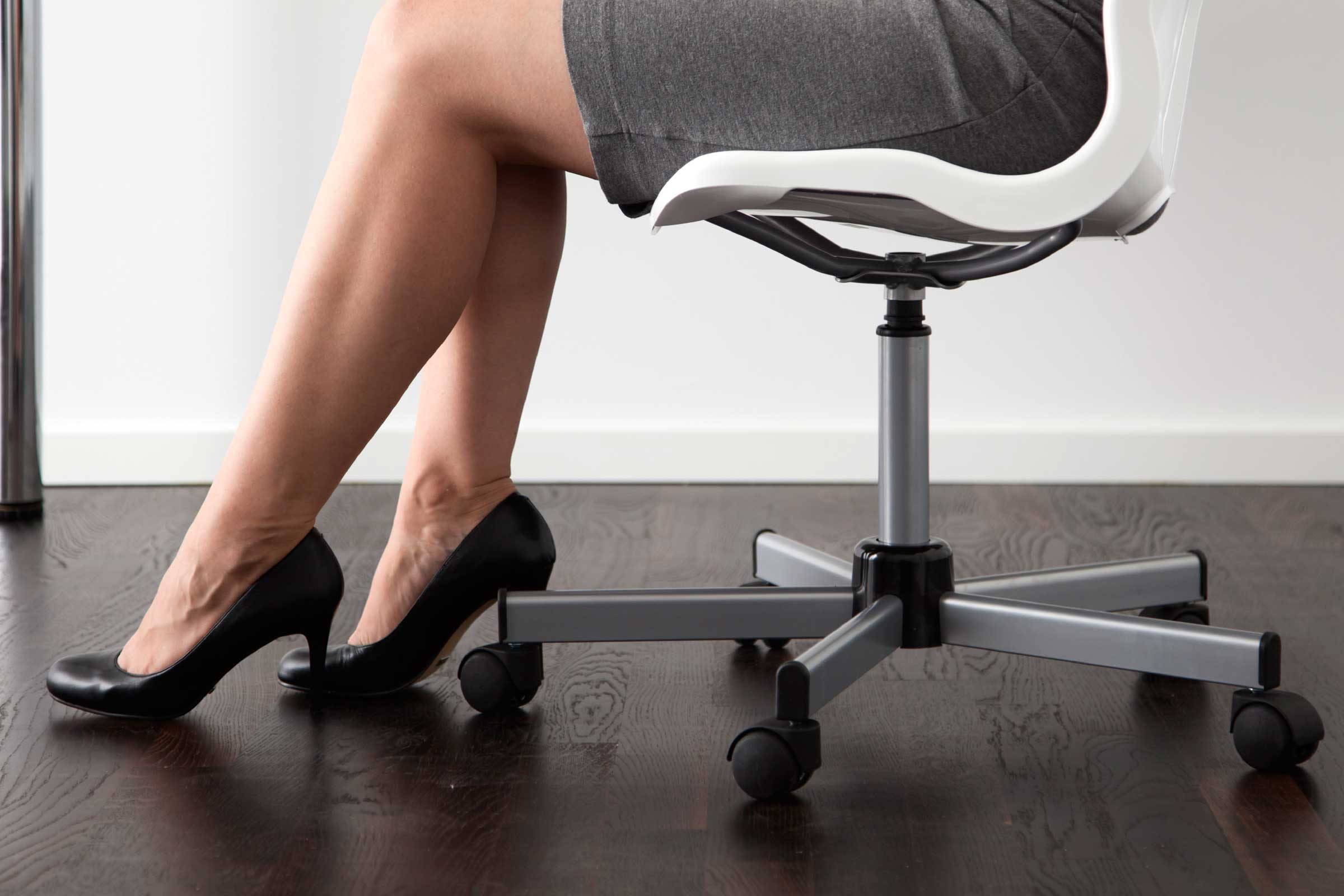
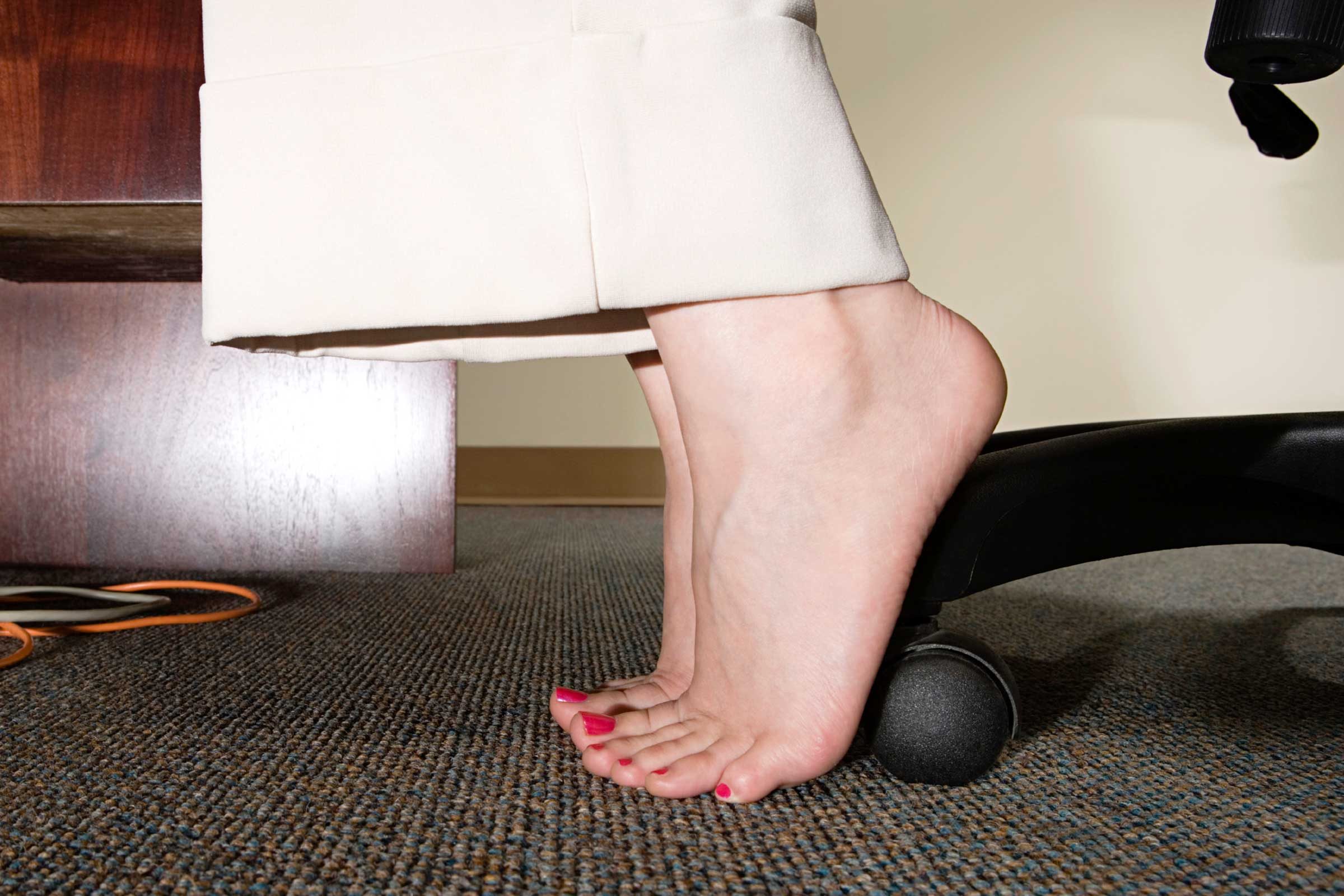
You can do this office exercise when you’re on the phone or doing something that doesn’t require you to write or participate beyond talking. Stand behind your chair, holding onto the back. Rest your right foot on back of your left lower leg. Do toe raises on your left foot. Switch sides. (If you’re in heels, remove them first.)

Desk exercise: Tighten and tone your butt 


Tense up gluteal muscles as you sit in your chair. Hold for 10 seconds. Do reps of 10 at a time. No one has to know you’re doing them.


Desk exercise: Jump-start digestion


Make your stomach flatter with this digestion exercise to stimulate peristalsis, the wave-like muscle contractions that move food through the digestive tract. Suck in your stomach as far as you can, then stick it out as far as you can. Breathe in when sucking in and breathe out when you push your stomach out. This small exercise helps blood flow to the stomach, aids in digestion, and exercises your abdominal muscles, says Lakatos Shames.

SOURCE BY : http://www.rd.com/health/diet-weight-loss/lose-weight-desk-exercises/

Wednesday, April 6, 2016

Can You Lose Fat and Build Muscle At The Same Time?

Almost every guy I’ve ever talked to wants to “lose fat and build muscle” so as to stay the same weight but look leaner and more toned.

It seems like many guys believe it’s possible to build 15lb of muscle and lose 15lb of fat in a few months if you eat right and have a great training program. But is that really possible, or is this wishful thinking?

First, let’s answer the question if it’s possible to lose fat and build muscle at the same time.

The short answer is that it depends on what you mean by the “same time”. Could be yes, could be no.


No – Physiologically speaking, it’s not possible to lose fat and build muscle at the same exact moment in time because one process is catabolic (losing fat) and the other is anabolic (building muscle).

Yes – It is possible, however, to gain muscle and lose fat over let’s say the course of two months, or even over the course of a day you may be able to lose fat and build muscle, but on a very small scale.

So now there are two more questions we must answer:

1) Is it worth attempting to lose fat and build muscle at the same time?

2) How do you try to lose fat and build muscle at the same time?

The rest of the article will address these two questions.

Is it worth trying to lose fat and build muscle at the same time?

I think the answer is a resounding No.

I give you this answer after one of my private clients gained 10lb of muscle and lost 10lb of fat in only a month. While he certainly is an aberration, the key point is that we were not trying to lose fat and build muscle at the same time. We were focusing on fat loss without muscle loss while taking advantage of his anabolic window, which I will discuss in a second.


There is not one top fitness model, or natural bodybuilder who tries to lose fat and build muscle at the same time. For people whose livelihood depends on their ability to transform their bodies, they focus on a muscle building phase of 6-9 months, then fat loss phase of 2-3 months. I think that should tell you everything you need to know right there.

Losing fat and building muscle at the same time sounds extremely desirable, but it’s NOT an intelligent approach to maximize your results despite all the marketing you see that tells you otherwise. Building muscle is anabolic, which requires you create a calorie surplus, while losing fat is catabolic and requires that you create a calorie deficit. Why attempt to do both at the same time for only mediocre results at best?

For over 5 years of my life, I spun my wheels trying to lose fat and build muscle at the same time. That’s a LONG time to spend 3-5 days in the gym for little to no results. I don’t want you to experience the same disappointment.


How To Lose Fat And Build Muscle At The Same Time?

The short answer is “nutrient timing” can help you lose fat and build muscle over the course of a few months, but I still STRONGLY recommend having the primary goal of either losing fat, or building muscle NOT both equally. I also want to emphasize that pursuing a fat loss phase, or a muscle building phase is far superior to maximize your results.

Nutrient timing is determined by (1) when you eat, (2) how much you eat, and (3) what you eat that together affect how your body responds. There are different schools of thought regarding nutrient timing and some nutrient timing plans can get so tedious and complicated that you would have to quit your day job to follow them.

So before getting into more specifics, if you do try to lose fat and build muscle, which one should you emphasize?

If you have more than 15% body fat (25% body fat for woman), I would STRONGLY recommend focusing on fat loss, with potentially some muscle gain if you’re lucky. The reverse is true for attempting to build muscle with some moderate fat loss. Here are 5 Ways to Measure Your Body Fat if you don’t know where to start.

One very easy to implement nutrient timing strategy for primarily fat loss is to reduce calorie intake for most of the week. Around your strength training workouts you can eat a high protein/moderate carb snack (let’s say 30g of protein, 30g of carbs) both 30 minutes before and after your workout to maximize the anabolic window when your muscles are most sensitive to sucking in protein. I generally do not recommend this strategy for people looking to lose fat without losing muscle because it can slow down progress, but I have seen it work well.

In terms of your workout routine, workouts don’t need to be that much different between going for muscle building and fat loss. In fact, many people have lost fat and gained muscle using the 12-week BuiltLean Program. I think regardless of whether your primary goal is losing fat, or building muscle, I would lift weights that are heavy for you to handle. The light weight, high rep strategy is just not as effective.

I know I covered a lot of questions in this one article that I get ALL the time, but let me know if you have any other questions by leaving a comment below. I hope this article was informative for you.

SOURCE BY : http://www.builtlean.com/2011/08/04/can-you-lose-fat-and-build-muscle-at-the-same-time/

Friday, April 1, 2016

What Are the Best Ways to Decrease Your Body Fat Percentage ?

Decreasing your body fat percentage can help you look leaner, feel healthier and perform better in sports. As you lose excess storage fat and put on more muscle, your body fat percentage will gradually drop. How hard you'll need to work to reach your goal depends on how much fat you have to lose and how low you want your body fat level to be.


Understanding Body Fat

Carrying too much fat puts you at risk for chronic illnesses such as heart disease and type 2 diabetes. For men, a healthy body fat percentage is between 11 and 22 percent; for women, it's between 22 and 33 percent. Athletes and fitness enthusiasts may have even lower levels, because of the demands of their sport and because of their desire to look exceptionally lean. No official guidelines for percentage of body fat exist, because body fat levels depend on genetics, age and gender. Fitness or health organizations publish ranges that may differ slightly from these, but those ranges will let you know if you're generally in the overweight range, the healthy range or the athletic range.

When setting goals for your body fat levels, keep in mind that men must carry from 2 to 5 percent essential fat to support optimal body function. Women have a slightly higher minimum requirement, of 10 to 13 percent of fat, to support pregnancy and childbirth.

Initiating Fat Loss

You'll start to burn fat stores when your calorie intake drops below what your body needs to maintain itself. Find an online calculator that will help you figure out your daily calorie needs, then subtract 500 to 1,000 calories from your original number. The new, lower calorie total will help you lose 1 to 2 pounds per week. At this rate, you can expect to lose about 1 percent of your body fat a month. If you want professional advice about your calorie needs, speak with a dietitian. Remember, don't reduce your calorie intake below 1,200 calories or you'll risk becoming nutritionally deficient and losing lean muscle mass.

Making simple changes -- such as avoiding soda, alcohol, sugary treats and processed snacks -- goes a long way toward helping you reduce your body fat. Add a daily walk or other cardiovascular exercise to burn even more calories.

In addition to cardio, try strength training. Engaging in two weight training sessions a week will build muscle mass on your frame to increase the amount of lean tissue you carry. Start with body weight exercises, such as squats and pushups, and as you feel stronger, add resistance from machines, free weights or resistance tubing. Each workout should include at least one set of eight to 12 repetitions of an exercise for each major muscle group.

Decreasing Body Fat Percentage Further

When you're already at a healthy body fat level but want to become even leaner so your muscles look more defined and you feel fitter, make additional changes to your diet and exercise plan. For example, as a man, your goal might be to go from 18 percent body fat to around 14; as a woman, your goal might be to go from 28 body fat to about 22 percent.

Continue to maintain a calorie deficit and focus more diligently on portion sizes and on the types of foods you choose. At most meals, eat a palm-sized portion of lean protein that's baked, stir-fried or grilled, along with a small fistful of whole grains and a generous handful or two of watery, fibrous vegetables. Make your snacks consist of healthy whole foods such as low-fat yogurt or fruit. Limit restaurant visits to once or twice a week and make the healthiest choices you can. Keep your intake of treats, alcohol and sugary beverages to a minimum.

Plan to exercise most days for 30 to 45 minutes. Include higher intensity cardio, such as running and interval training, during which you alternate blocks of high-intensity work with short rest periods.

Increase your strength-training schedule to three or four days a week on non-consecutive days. Do three to six sets of eight to 12 repetitions of compound movements such as back squats, chest presses and deadlifts. Use resistance that feels quite heavy by the last couple of efforts.

Achieving "Athlete" Level Body Fat

Fitness models, exercise enthusiasts and athletes have body fat levels that range from 6 to 13 percent for men and 13 to 20 percent for women. These lower body fat levels may help you feel lighter out on the field, flex more impressively on stage and look exceptionally fit.

To achieve such low levels of body fat, you must adhere to strict dietary guidelines and strict exercise regimens. Workouts last 60 to 90 minutes on most days. You'll need to participate in interval training two to three times a week, and you'll need to lift heavy weights for three to six sessions a week. Likely, you'll do multiple exercises for each muscle group; for example, you'll do flyes, presses and pushups for the chest and rows, pull ups and pullovers for the back.

Plan your portions of carbohydrates, protein and fats carefully. At meals, eat 20 to 30 grams of protein with only 1/2 to 1 cup of whole grains or starchy vegetables, a teaspoon of healthy fat and an ample amount of leafy vegetables. Post-workout protein snacks are critical to help you become stronger and recover more quickly to enable you to hit the gym again the next day. Each snack should contain 20 grams of protein and some healthy carbohydrates. Examples of these snacks are whey protein mixed with milk and fresh fruit or one half of a turkey sandwich on whole-wheat bread.


Lifestyle Habits to Help You Lose Fat

Adequate rest and recovery is critical, regardless of how much body fat you aim to lose. Plan to get seven to nine hours of quality sleep a night, as sleep is the prime time to release the hormones responsible for muscle growth and repair. Good sleep habits also keep your hunger levels in check and maximize your daytime energy levels so your workouts can be spot on.

How you deal with stress -- whether the stress is from work deadlines, financial problems or family issues -- will influence your output of the hormone cortisol. Releasing excessive amounts of cortisol, which happen when you feel stressed and overwhelmed, makes you crave fatty, sugary foods so it becomes difficult to stick to your eating plan. Cortisol can also cause your body to hold on to extra pounds. To lose body fat, learn to deal with stress constructively such as by participating in calming activities like yoga, meditation or journaling.


Source by :- http://www.livestrong.com/article/240209-best-way-to-lose-body-fat-percentage/