Showing posts with label Body Fat Percentage. Show all posts

Saturday, April 23, 2016

How to Lose Fat When Your Body Fat Percentage Is Over 50 Percent


Weight loss requires willpower and dedication, but if you have a lot of weight to lose, it's especially daunting. When your body fat percentage is over 50 percent, you're likely looking at months or possibly years of work to get the physique you want, depending on how much weight loss you plan to achieve. However, you'll likely see noticeable results within the first two months, which can motivate you to keep going. Talk to your doctor before you start on your weight-loss and fitness journey; she can offer guidance to address any underlying health conditions to keep you safe as you get fit and lose body fat.

Starting Your Fat Loss Journey


Exactly how much fat you need to lose depends on your current weight. If you're currently considerably overweight or obese, you should aim for significant weight loss; if you're not significantly overweight, but have a high body fat percentage, aim for a smaller weight loss to help improve your body composition. Your target body fat percentage varies depending on your age and gender; women should generally aim for 16 to 31 percent, while men should try for 10 to 22 percent.

To lose fat, you need to burn more calories than you take in from food and drinks so that your body will release and burn fat to make up the difference. Aim for a loss of 1 to 2 pounds per week, which you can achieve by cutting 500 to 1,000 calories from your daily diet. Following a healthy diet and exercise program, you should be able to lose about 1 percent of your body fat each month, according to the American Council on Exercise.

Use an online calculator to estimate your daily calorie needs, so you can subtract the 500 to 1,000 calories for weight loss. Keep in mind, though, that an online calculator just provides a calorie burn estimate based on your age, gender and size, and it doesn't take into account your body composition. Because fat burns fewer calories than muscle, and you have a higher-than-average proportion of fat, an online calculator might overestimate your calorie needs. Use the calorie target from an online calculator as a starting point, but expect to adjust your calorie intake slightly as you progress until you find an intake that allows you to lose 1 to 2 pounds weekly.

Lowering Body Fat Percentage With Diet


You'll see the fastest results -- and achieve a healthier body composition -- if you adjust your diet to promote fat loss and retain muscle tissue. Make sure you're eating plenty of protein, which provides the amino acids you need to repair and build new muscle tissue. Plus, including protein in your meals also makes them more filling, so you'll feel satisfied even on a calorie-restricted diet. A mix of lean meats, nuts and seeds, dairy and eggs, lentils and beans, and fatty fish supply beneficial protein to help you shed fat. Round out the rest of your diet with whole grains, healthy fats -- like olive oil, flaxseed and avocado -- and fruits and veggies.

Experiment with different flavors on your fat loss journey, so you can find a selection of healthy recipes you truly enjoy. Hitting your calorie target -- not micromanaging your carb, fat and protein intakes -- is the most important aspect of fat loss, according to a study published in the American Journal of Clinical Nutrition. The study authors looked at the effects of four different types of calorie-restricted diets -- each with different proportions of fat, protein and carbohydrates -- and found they were all equally effective for weight loss. Ultimately, you'll get better results if you find a healthy diet you can stick to, rather than feeling forced into a diet you dislike and eventually give up.

Increase Your Fat Burn With Cardio


Getting more activity is key for fat loss -- heart-pumping aerobics increase your calorie demands for the day, and each workout will help you melt away fat. Find a few aerobics you enjoy -- for example, water aerobics, rowing, elliptical, brisk walking or running -- and cycle through your favorite activities throughout the week to avoid boredom.

If you're working out on a cardio machine, like an elliptical, don't feel obligated to stay in the "fat-burning" heart rate zone, which usually requires that you work at a low intensity. You'll actually burn more calories if you push yourself to work out at a moderate or vigorous intensity, which ultimately burns more fat and calories than staying in the fat-burning zone.

Improve Body Composition With Strength Training


Incorporating strength training into your routine also helps you lose fat. Strength training builds muscle -- a highly metabolically-active type of tissue -- so you're able to burn more calories throughout the day. It also helps you retain muscle as you lose fat, which will help ensure you're at a healthy body fat percentage when you hit your goal weight.

Schedule strength-training workouts into your routine twice or three times weekly, and make each session a full-body workout. Consider hiring a professional to conduct a fitness assessment and design a program for you. At a higher-than-average body fat percentage, some exercises might be especially difficult and require modification, at least until you get stronger and lose some body fat. A personalized program will get you the fastest results with the least risk of injury.

source by : http://www.livestrong.com/article/429085-what-is-the-fastest-way-to-lose-body-fat-when-your-body-is-50-percent-fat/

Friday, April 22, 2016

Lower Your Body Fat Percentage (in 10 Easy Steps)

The 10 easy steps you should follow to lower body fat percentage and reveal your six-pack.

Want to see your abs? As you almost certainly know by now, no amount of situps will help. Your rectus abdominis are already plenty big enough - they're just lurking under a protective cushion of unsightly fat. To see them, you'll need to drop down to the 12% bodyfat level – and to really make them pop, single digits are the key. How do you get there? Easy: by doing the following.

1. Eat more. Yes, you read that right. The key, though, is what to load up on. 'Add two fistfuls of green veg to every meal,' says Precision Nutrition's Brian St-Pierre. They're nutrient-dense but low on calories - so they'll fill you up without being fattening, and keep you healthy.

2. Try to drink a glass of water with every meal. It'll keep your body hydrated and full, and keep your metabolism online. Soft drinks? Out.

3. Enjoy eating out. Don't be the man ordering steamed chicken breast - as long as you're getting a decent hit of protein and green veg in, the steak and spinach is fine. Just leave the frites for cheat day.

4. Get stronger. Not everyone's first priority, but shifting more weight will make any workout more intense. By adding 1.5kg worth of muscle to your body you have the potential to burn 1,050 extra calories a week, according to a study by the University of Michigan. Aim to progress in big, compound lifts like the power clean and squat, and every workout becomes a fat-burner.

5. Go green. For tea, anyway - it's the most natural fat-burner available. Pair it with lemon to blunt your insulin response, making your body less likely to store food as fat.


6. Up the speed Medium-intensity cardio ups your cortisol and turns you into a fat-storage unit: so keep it short and aggressive. Try a Tabata row: 20 seconds' work, 10 seconds' rest, repeated 8 times. The catch? You need to manage 100 metres every interval.

7. Get a taste for spicier food. Capsaicin, the compound that gives chilli peppers their heat, will also play merry havoc your metabolism. Add paprika to your home-made burgers - you, uh, do make them from scratch, right? - and turn them into a fat-burning feast. 

8. Drink milk. There is some evidence that calcium deficiency could slow metabolism. Research has shown that consuming calcium through dairy foods like low fat yoghurt or –fat-free-cheese could also contribute to reducing fat absorption from other food sources.

9. Increase your vitamin D levels. This doesn’t include sitting in the sun for hours on end. Vitamin D absorbed from food is essential for the preservation of muscle tissue. You can get 90% of your recommended daily intake from a 100g piece of salmon. So eat plenty of fish, eggs, milk and cereals to get your intake up. And sit in the sun if you like, it can’t hurt…

10. Get your fibre on. Research has shown that some fibre can fire up your fat burning by as much as 30%. These studies have found that those who are consuming the most amount of fibre are gaining less weight over a period of time. It’s best to aim for around 25g per day.

SOURCE BY : http://www.coachmag.co.uk/exercises/lose-weight/3756/lower-your-body-fat-percentage-10-easy-steps

Sunday, April 10, 2016

4 Tips For Sticking To Your Diet When Dining Out

Don't surrender your social life in an effort to eat clean. Learn how to navigate restaurant menus and stay on your diet while eating out!

Dieting doesn't have to mean skimping on romantic evenings out or losing time with family and friends. Instead of staying at home and missing out on a delicious restaurant meal, arm yourself with knowledge so you can be social and eat smart. Follow these four surefire tips to help you stick to your diet when dining out!

1.DON'T DRINK YOUR CALORIES

Cutting out soda, sweet tea, and alcohol is one of the simplest strategies to reduce overall calories when dieting. If you follow this tip at home, simply carry it with you to any restaurant meal. Choose calorie-free options such as water (bonus: this one is usually free!) or a diet beverage. Instead of blowing your calorie bank on liquids, save indulgences for the main course.


2.TAKE CONTROL OF YOUR MEAL

Too often, people are hesitant to speak up about their preferences when ordering at restaurants. Never feel obligated to accept a meal other than what you originally planned. While you might have to ask for off-menu replacements, you shouldn't settle for a meal that completely deviates from the one you planned. Take control of your meal using these simple methods:

PERSONALIZE PREPARATION METHODS

Restaurants are pretty good at offering low-fat cooking options such as baking, roasting, or grilling, but keep in mind that simply asking for something grilled may not be enough. Despite being grilled or roasted, steaks and fish are often cooked in butter—a noticeable flavor booster, but unnoticeable calorie-booster. Don't be afraid to ask the chef to hold the butter, skip the sauce, and bypass the oil so you can stay on track.

SKIP THE FREE OFFERINGS

Don't let the bread basket that greets you at the table be your downfall. Remember, snacking counts! Filling up on complimentary tortilla chips will still cost you calories. While it's easy to slowly nibble on these not-so-nutritious snacks, they disappear quickly, which can add unwanted calories fast. Take charge and simply inform your server ahead of time that you're not interested in the freebies. This will place the unnecessary calories out of reach.


MAKE THE MENU YOURS

Not digging the twice-baked-potato casserole that comes with the grilled sirloin? Maybe your mouth is watering over the quinoa salad served with the fresh catch of the day, but you're allergic to seafood. Rather than falling back to a simple grilled chicken breast and salad, speak up and ask the server specifically for what you want: the grilled sirloin and quinoa salad.

There's simply no reason why you shouldn't be able to order each item you want, even if what you're after isn't paired together on the menu. After all, the ingredients are sure to be on hand for both items. Take control of your meal and enjoy it.

3.EAT PROTEIN, VEGGIES, AND CARBS—IN THAT ORDER

You don't necessarily need to eat your macros in this order bite-for-bite, but you should focus primarily on consuming both your protein and vegetables before moving on to your carbohydrates.

Protein and high-fiber vegetables—sorry, mashed potatoes don't make the cut—help to slow down digestion, which leaves you feeling fuller, faster. By placing an emphasis on these two items from the start, you're less likely to overindulge in a creamy, sugary dessert because you're already full.

SUGARY DESSERT.

Your source of fat may come from your succulent steak, fresh vinaigrette, or even from sliced avocado. If you happen to have a healthy fat mixed in, go ahead and eat that in conjunction with the protein and veggies before thinking about crushing the carbs!

4.INSTILL PORTION CONTROL FROM THE START

From supersized and extra fries to all-you-can-eat extravaganzas, restaurants are quickly becoming patrons' favorite places, not only because of the dishes they serve, but because of the size of those dishes. Many people see it simply as "the bigger, the better." Sure, this nets you more bang for your buck, but if you're like many people and feel the urge to clean your plate(s), you're likely to hit your macros for the next three days all in one meal.

If you find yourself at a restaurant with oversized portions, request that a to-go box be brought out with your meal. This way, once your food arrives at the table, you can put away a portion for your next meal or two and focus on enjoying the amount at hand. Hey, it's like ordering two meals for the price of one!

SOURCE BY : http://www.bodybuilding.com/fun/4-tips-for-sticking-to-your-diet-when-dining-out


Wednesday, April 6, 2016

Can You Lose Fat and Build Muscle At The Same Time?

Almost every guy I’ve ever talked to wants to “lose fat and build muscle” so as to stay the same weight but look leaner and more toned.

It seems like many guys believe it’s possible to build 15lb of muscle and lose 15lb of fat in a few months if you eat right and have a great training program. But is that really possible, or is this wishful thinking?

First, let’s answer the question if it’s possible to lose fat and build muscle at the same time.

The short answer is that it depends on what you mean by the “same time”. Could be yes, could be no.


No – Physiologically speaking, it’s not possible to lose fat and build muscle at the same exact moment in time because one process is catabolic (losing fat) and the other is anabolic (building muscle).

Yes – It is possible, however, to gain muscle and lose fat over let’s say the course of two months, or even over the course of a day you may be able to lose fat and build muscle, but on a very small scale.

So now there are two more questions we must answer:

1) Is it worth attempting to lose fat and build muscle at the same time?

2) How do you try to lose fat and build muscle at the same time?

The rest of the article will address these two questions.

Is it worth trying to lose fat and build muscle at the same time?

I think the answer is a resounding No.

I give you this answer after one of my private clients gained 10lb of muscle and lost 10lb of fat in only a month. While he certainly is an aberration, the key point is that we were not trying to lose fat and build muscle at the same time. We were focusing on fat loss without muscle loss while taking advantage of his anabolic window, which I will discuss in a second.


There is not one top fitness model, or natural bodybuilder who tries to lose fat and build muscle at the same time. For people whose livelihood depends on their ability to transform their bodies, they focus on a muscle building phase of 6-9 months, then fat loss phase of 2-3 months. I think that should tell you everything you need to know right there.

Losing fat and building muscle at the same time sounds extremely desirable, but it’s NOT an intelligent approach to maximize your results despite all the marketing you see that tells you otherwise. Building muscle is anabolic, which requires you create a calorie surplus, while losing fat is catabolic and requires that you create a calorie deficit. Why attempt to do both at the same time for only mediocre results at best?

For over 5 years of my life, I spun my wheels trying to lose fat and build muscle at the same time. That’s a LONG time to spend 3-5 days in the gym for little to no results. I don’t want you to experience the same disappointment.


How To Lose Fat And Build Muscle At The Same Time?

The short answer is “nutrient timing” can help you lose fat and build muscle over the course of a few months, but I still STRONGLY recommend having the primary goal of either losing fat, or building muscle NOT both equally. I also want to emphasize that pursuing a fat loss phase, or a muscle building phase is far superior to maximize your results.

Nutrient timing is determined by (1) when you eat, (2) how much you eat, and (3) what you eat that together affect how your body responds. There are different schools of thought regarding nutrient timing and some nutrient timing plans can get so tedious and complicated that you would have to quit your day job to follow them.

So before getting into more specifics, if you do try to lose fat and build muscle, which one should you emphasize?

If you have more than 15% body fat (25% body fat for woman), I would STRONGLY recommend focusing on fat loss, with potentially some muscle gain if you’re lucky. The reverse is true for attempting to build muscle with some moderate fat loss. Here are 5 Ways to Measure Your Body Fat if you don’t know where to start.

One very easy to implement nutrient timing strategy for primarily fat loss is to reduce calorie intake for most of the week. Around your strength training workouts you can eat a high protein/moderate carb snack (let’s say 30g of protein, 30g of carbs) both 30 minutes before and after your workout to maximize the anabolic window when your muscles are most sensitive to sucking in protein. I generally do not recommend this strategy for people looking to lose fat without losing muscle because it can slow down progress, but I have seen it work well.

In terms of your workout routine, workouts don’t need to be that much different between going for muscle building and fat loss. In fact, many people have lost fat and gained muscle using the 12-week BuiltLean Program. I think regardless of whether your primary goal is losing fat, or building muscle, I would lift weights that are heavy for you to handle. The light weight, high rep strategy is just not as effective.

I know I covered a lot of questions in this one article that I get ALL the time, but let me know if you have any other questions by leaving a comment below. I hope this article was informative for you.

SOURCE BY : http://www.builtlean.com/2011/08/04/can-you-lose-fat-and-build-muscle-at-the-same-time/

Monday, April 4, 2016

Ideal Body Fat Percentage Chart: How Lean Should You Be?

what is your ideal body fat percentage? What is a healthy, realistic body fat percentage to shoot for so you can have that lean, toned body you desire?

While there is some debate as to what constitutes a “healthy” body fat range, I have below 2 different types of body fat percentage charts, which I will walk you through along with some insights into how to read each chart.

Ideal Body Fat Percentage Chart #1: ACE

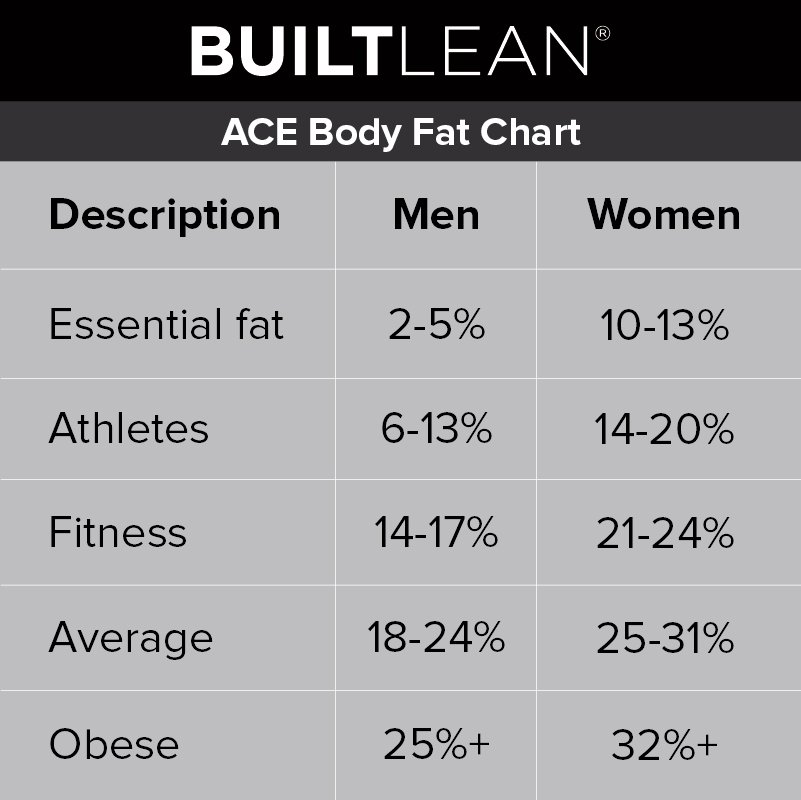
The chart below from the American Council on Exercise (ACE) is one of the most commonly used body fat charts.1 As you can see, women have a higher body fat percentage relative to men for a given level. Women have more fat because of physiological differences such as hormones, breasts, and sexual organs. In addition, women need a higher amount of body fat for ovulation.


“Essential fat” is the minimum amount of fat necessary for basic physical and physiological health. There is a lot of controversy over what amount of body fat is optimal for overall health. A research paper by Gallagher et. al. in the American Journal of Clinical Nutrition (2000) came to the conclusion that certain low body fat ranges are “underfat”, which implies “unhealthy”.2 According to this research paper, men who are between 20-40 years old with under 8% body fat are considered “underfat”, whereas a “healthy” range is described as between 8-19%. For women in this same age group, any level under 21% is “underfat” and 21-33% is considered “healthy”.

In my opinion, I think body fat is one important measure of health, but stating a certain body fat level is “unhealthy” doesn’t give the whole story. In fact, some overweight people who exercise can be healthier than their leaner non-exercising counterparts.3 Conversely, to imply that anyone who has a six pack (below 8% body fat for men), is very athletic, and eats well is “underfat”, or “unhealthy” is a stretch. We all have different shapes, sizes, and fat distribution profiles, but I think the chart above is a good starting point.

The limitation of the ACE chart is that while it takes into account gender differences, it does not take into account your age, which is exactly why I included the next two charts.

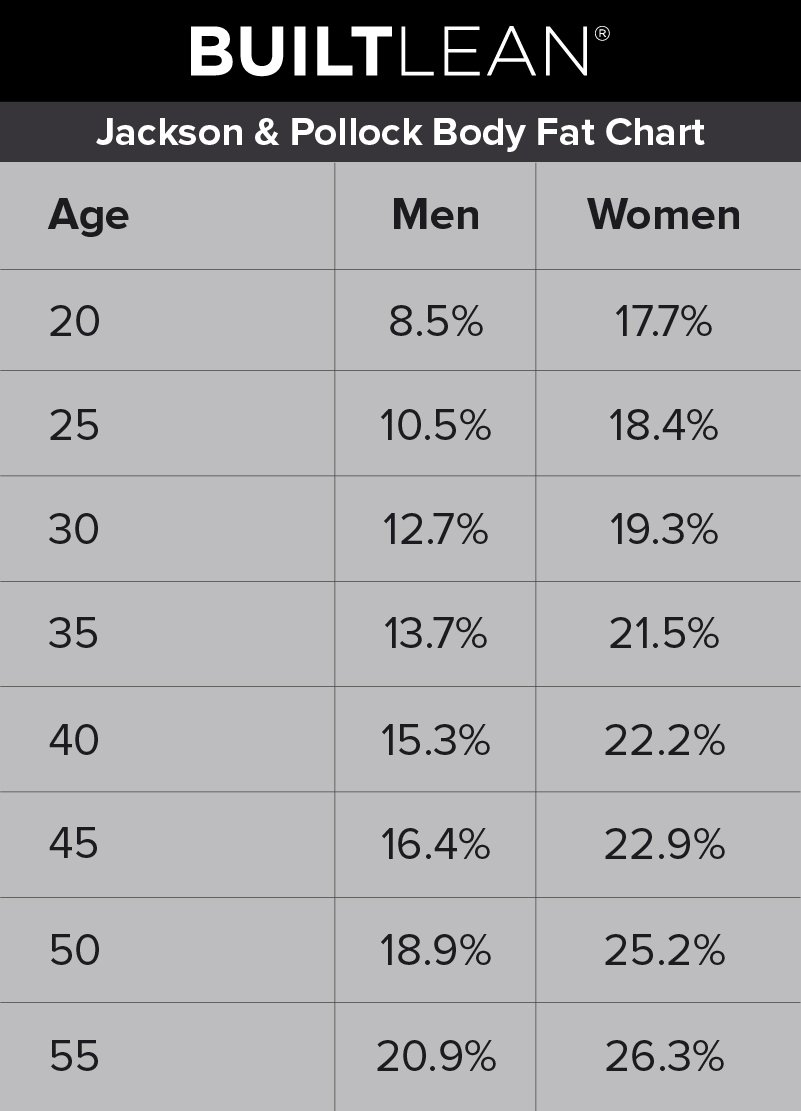
Ideal Body Fat Percentage Chart #2: Jackson & Pollock

AccuFitness is the maker of the popular Accu-Measure Body Fat Caliper, which is a one-site skinfold body fat measurement method. When you buy the product, AccuFitness includes a body fat percentage chart based on research by Jackson & Pollock (which has become the industry standard) that I think both aesthetically and from a health perspective is right on the money.

In case you don’t understand how to read this chart, just find your age on the left hand column, then see the corresponding body fat percentage to the right. So if you are a 30 year old man, a body fat percentage of around 12.7% is considered ideal.


You may have noticed as your age increases, your acceptable body fat within these ranges increases as well. Why you ask? In short, these charts are based on statistical assumptions. Older individuals tend to have a lower body density for the same skinfold measurements, which is assumed to indicate a higher body fat percentage. Older, athletic individuals, however, might not fit this assumption because their body density may be underestimated.

Digging a little deeper, there are 3 types of fat: subcutaneous (under the skin), visceral (around the organs), and intramuscular (in between muscle, like a marbled steak). The amount of subcutaneous body fat you have may stay the same, but the visceral and intramuscular fat may increase as you age. For a visual representation of a given body fat level, you can check out this article:


I hope this discussion of ideal body fat percentage was helpful for you!

source by : http://www.builtlean.com/2010/08/03/ideal-body-fat-percentage-chart/

Friday, April 1, 2016

What Are the Best Ways to Decrease Your Body Fat Percentage ?

Decreasing your body fat percentage can help you look leaner, feel healthier and perform better in sports. As you lose excess storage fat and put on more muscle, your body fat percentage will gradually drop. How hard you'll need to work to reach your goal depends on how much fat you have to lose and how low you want your body fat level to be.


Understanding Body Fat

Carrying too much fat puts you at risk for chronic illnesses such as heart disease and type 2 diabetes. For men, a healthy body fat percentage is between 11 and 22 percent; for women, it's between 22 and 33 percent. Athletes and fitness enthusiasts may have even lower levels, because of the demands of their sport and because of their desire to look exceptionally lean. No official guidelines for percentage of body fat exist, because body fat levels depend on genetics, age and gender. Fitness or health organizations publish ranges that may differ slightly from these, but those ranges will let you know if you're generally in the overweight range, the healthy range or the athletic range.

When setting goals for your body fat levels, keep in mind that men must carry from 2 to 5 percent essential fat to support optimal body function. Women have a slightly higher minimum requirement, of 10 to 13 percent of fat, to support pregnancy and childbirth.

Initiating Fat Loss

You'll start to burn fat stores when your calorie intake drops below what your body needs to maintain itself. Find an online calculator that will help you figure out your daily calorie needs, then subtract 500 to 1,000 calories from your original number. The new, lower calorie total will help you lose 1 to 2 pounds per week. At this rate, you can expect to lose about 1 percent of your body fat a month. If you want professional advice about your calorie needs, speak with a dietitian. Remember, don't reduce your calorie intake below 1,200 calories or you'll risk becoming nutritionally deficient and losing lean muscle mass.

Making simple changes -- such as avoiding soda, alcohol, sugary treats and processed snacks -- goes a long way toward helping you reduce your body fat. Add a daily walk or other cardiovascular exercise to burn even more calories.

In addition to cardio, try strength training. Engaging in two weight training sessions a week will build muscle mass on your frame to increase the amount of lean tissue you carry. Start with body weight exercises, such as squats and pushups, and as you feel stronger, add resistance from machines, free weights or resistance tubing. Each workout should include at least one set of eight to 12 repetitions of an exercise for each major muscle group.

Decreasing Body Fat Percentage Further

When you're already at a healthy body fat level but want to become even leaner so your muscles look more defined and you feel fitter, make additional changes to your diet and exercise plan. For example, as a man, your goal might be to go from 18 percent body fat to around 14; as a woman, your goal might be to go from 28 body fat to about 22 percent.

Continue to maintain a calorie deficit and focus more diligently on portion sizes and on the types of foods you choose. At most meals, eat a palm-sized portion of lean protein that's baked, stir-fried or grilled, along with a small fistful of whole grains and a generous handful or two of watery, fibrous vegetables. Make your snacks consist of healthy whole foods such as low-fat yogurt or fruit. Limit restaurant visits to once or twice a week and make the healthiest choices you can. Keep your intake of treats, alcohol and sugary beverages to a minimum.

Plan to exercise most days for 30 to 45 minutes. Include higher intensity cardio, such as running and interval training, during which you alternate blocks of high-intensity work with short rest periods.

Increase your strength-training schedule to three or four days a week on non-consecutive days. Do three to six sets of eight to 12 repetitions of compound movements such as back squats, chest presses and deadlifts. Use resistance that feels quite heavy by the last couple of efforts.

Achieving "Athlete" Level Body Fat

Fitness models, exercise enthusiasts and athletes have body fat levels that range from 6 to 13 percent for men and 13 to 20 percent for women. These lower body fat levels may help you feel lighter out on the field, flex more impressively on stage and look exceptionally fit.

To achieve such low levels of body fat, you must adhere to strict dietary guidelines and strict exercise regimens. Workouts last 60 to 90 minutes on most days. You'll need to participate in interval training two to three times a week, and you'll need to lift heavy weights for three to six sessions a week. Likely, you'll do multiple exercises for each muscle group; for example, you'll do flyes, presses and pushups for the chest and rows, pull ups and pullovers for the back.

Plan your portions of carbohydrates, protein and fats carefully. At meals, eat 20 to 30 grams of protein with only 1/2 to 1 cup of whole grains or starchy vegetables, a teaspoon of healthy fat and an ample amount of leafy vegetables. Post-workout protein snacks are critical to help you become stronger and recover more quickly to enable you to hit the gym again the next day. Each snack should contain 20 grams of protein and some healthy carbohydrates. Examples of these snacks are whey protein mixed with milk and fresh fruit or one half of a turkey sandwich on whole-wheat bread.


Lifestyle Habits to Help You Lose Fat

Adequate rest and recovery is critical, regardless of how much body fat you aim to lose. Plan to get seven to nine hours of quality sleep a night, as sleep is the prime time to release the hormones responsible for muscle growth and repair. Good sleep habits also keep your hunger levels in check and maximize your daytime energy levels so your workouts can be spot on.

How you deal with stress -- whether the stress is from work deadlines, financial problems or family issues -- will influence your output of the hormone cortisol. Releasing excessive amounts of cortisol, which happen when you feel stressed and overwhelmed, makes you crave fatty, sugary foods so it becomes difficult to stick to your eating plan. Cortisol can also cause your body to hold on to extra pounds. To lose body fat, learn to deal with stress constructively such as by participating in calming activities like yoga, meditation or journaling.


Source by :- http://www.livestrong.com/article/240209-best-way-to-lose-body-fat-percentage/