Showing posts with label how to lose body fat in 2 weeks. Show all posts

Friday, April 22, 2016

Lower Your Body Fat Percentage (in 10 Easy Steps)

The 10 easy steps you should follow to lower body fat percentage and reveal your six-pack.

Want to see your abs? As you almost certainly know by now, no amount of situps will help. Your rectus abdominis are already plenty big enough - they're just lurking under a protective cushion of unsightly fat. To see them, you'll need to drop down to the 12% bodyfat level – and to really make them pop, single digits are the key. How do you get there? Easy: by doing the following.

1. Eat more. Yes, you read that right. The key, though, is what to load up on. 'Add two fistfuls of green veg to every meal,' says Precision Nutrition's Brian St-Pierre. They're nutrient-dense but low on calories - so they'll fill you up without being fattening, and keep you healthy.

2. Try to drink a glass of water with every meal. It'll keep your body hydrated and full, and keep your metabolism online. Soft drinks? Out.

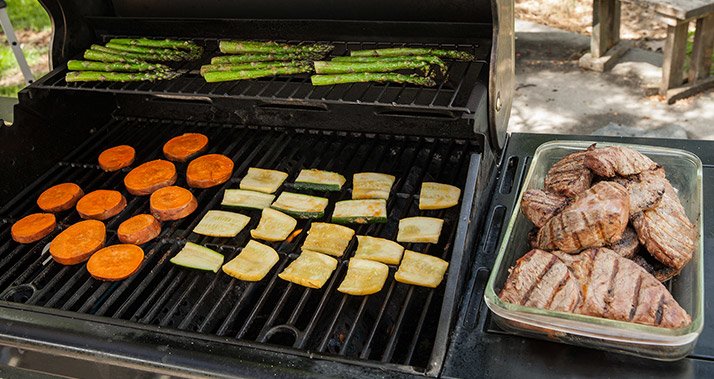
3. Enjoy eating out. Don't be the man ordering steamed chicken breast - as long as you're getting a decent hit of protein and green veg in, the steak and spinach is fine. Just leave the frites for cheat day.

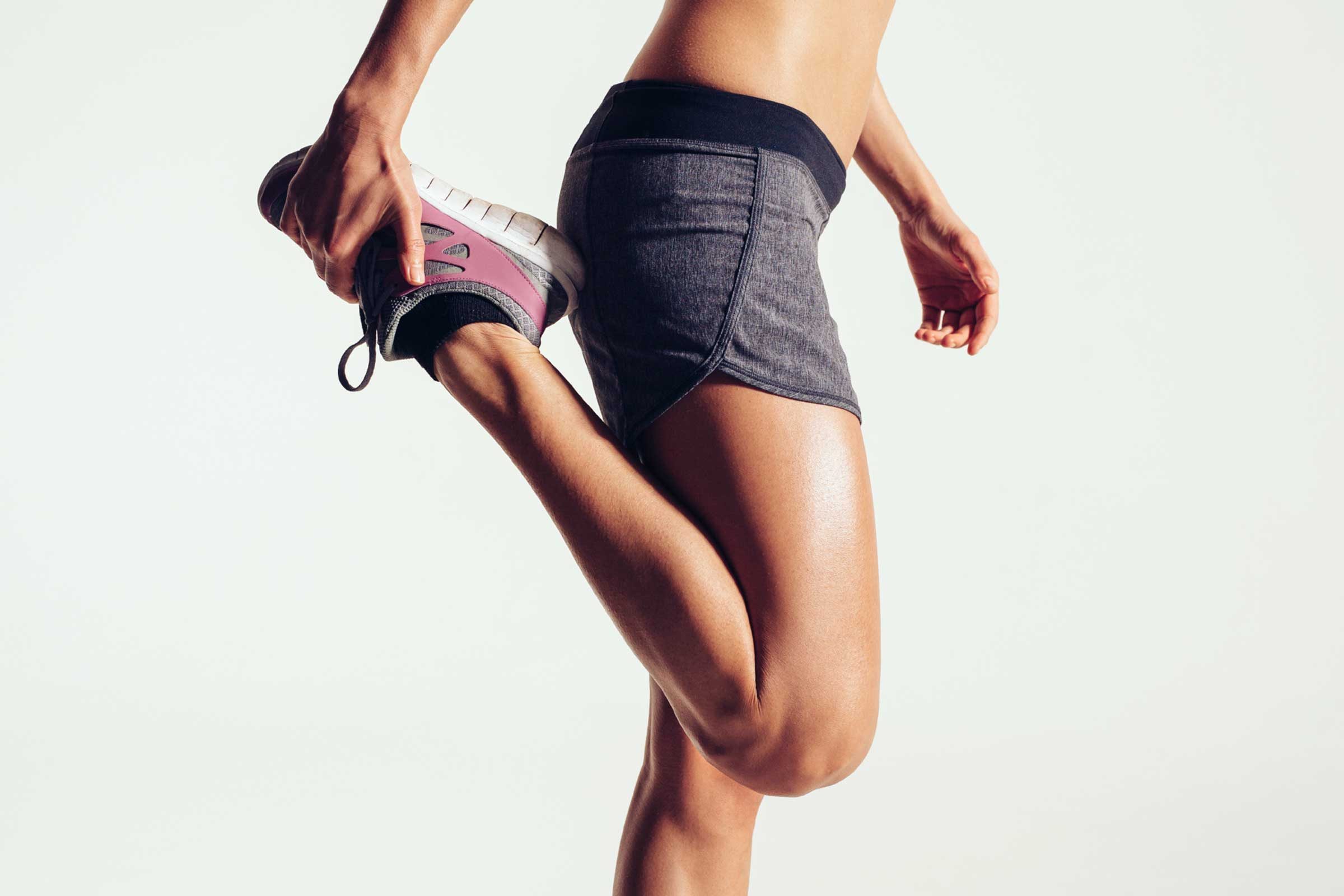
4. Get stronger. Not everyone's first priority, but shifting more weight will make any workout more intense. By adding 1.5kg worth of muscle to your body you have the potential to burn 1,050 extra calories a week, according to a study by the University of Michigan. Aim to progress in big, compound lifts like the power clean and squat, and every workout becomes a fat-burner.

5. Go green. For tea, anyway - it's the most natural fat-burner available. Pair it with lemon to blunt your insulin response, making your body less likely to store food as fat.


6. Up the speed Medium-intensity cardio ups your cortisol and turns you into a fat-storage unit: so keep it short and aggressive. Try a Tabata row: 20 seconds' work, 10 seconds' rest, repeated 8 times. The catch? You need to manage 100 metres every interval.

7. Get a taste for spicier food. Capsaicin, the compound that gives chilli peppers their heat, will also play merry havoc your metabolism. Add paprika to your home-made burgers - you, uh, do make them from scratch, right? - and turn them into a fat-burning feast. 

8. Drink milk. There is some evidence that calcium deficiency could slow metabolism. Research has shown that consuming calcium through dairy foods like low fat yoghurt or –fat-free-cheese could also contribute to reducing fat absorption from other food sources.

9. Increase your vitamin D levels. This doesn’t include sitting in the sun for hours on end. Vitamin D absorbed from food is essential for the preservation of muscle tissue. You can get 90% of your recommended daily intake from a 100g piece of salmon. So eat plenty of fish, eggs, milk and cereals to get your intake up. And sit in the sun if you like, it can’t hurt…

10. Get your fibre on. Research has shown that some fibre can fire up your fat burning by as much as 30%. These studies have found that those who are consuming the most amount of fibre are gaining less weight over a period of time. It’s best to aim for around 25g per day.

SOURCE BY : http://www.coachmag.co.uk/exercises/lose-weight/3756/lower-your-body-fat-percentage-10-easy-steps

Friday, April 15, 2016

10 Tricks to Lose Weight Just Sitting at Your Desk

Set a timer to get up every 20 minutes or so

ISTOCK/LAFLOR
You’ve heard this tip before, but it’s worth repeating. Simply standing up more often helps to prevent weight gain versus sitting. We expend a surprising number of calories through non-exercise activity thermogenesis (NEAT)—activities like walking to the water cooler, vacuuming, and even toe tapping and fidgeting. This incidental movement can help with fat loss, say The Nutrition Twins, Lyssie Lakatos, RDN, and Tammy Lakatos Shames, RDN. Obese people tend to sit 2.5 hours a day more than their sedentary lean counterparts, research shows. Some fitness bands not only track your steps, but they’ll remind you if you’ve been inactive for a certain period of time. You can set a quiet vibration timer on your phone or a desktop one with your sound turned off (like e.ggtimer.com) that’ll remind you to get up and take a loop around the office. Here are tricks to make your walking routine even healthier.


Toss out junky snacks


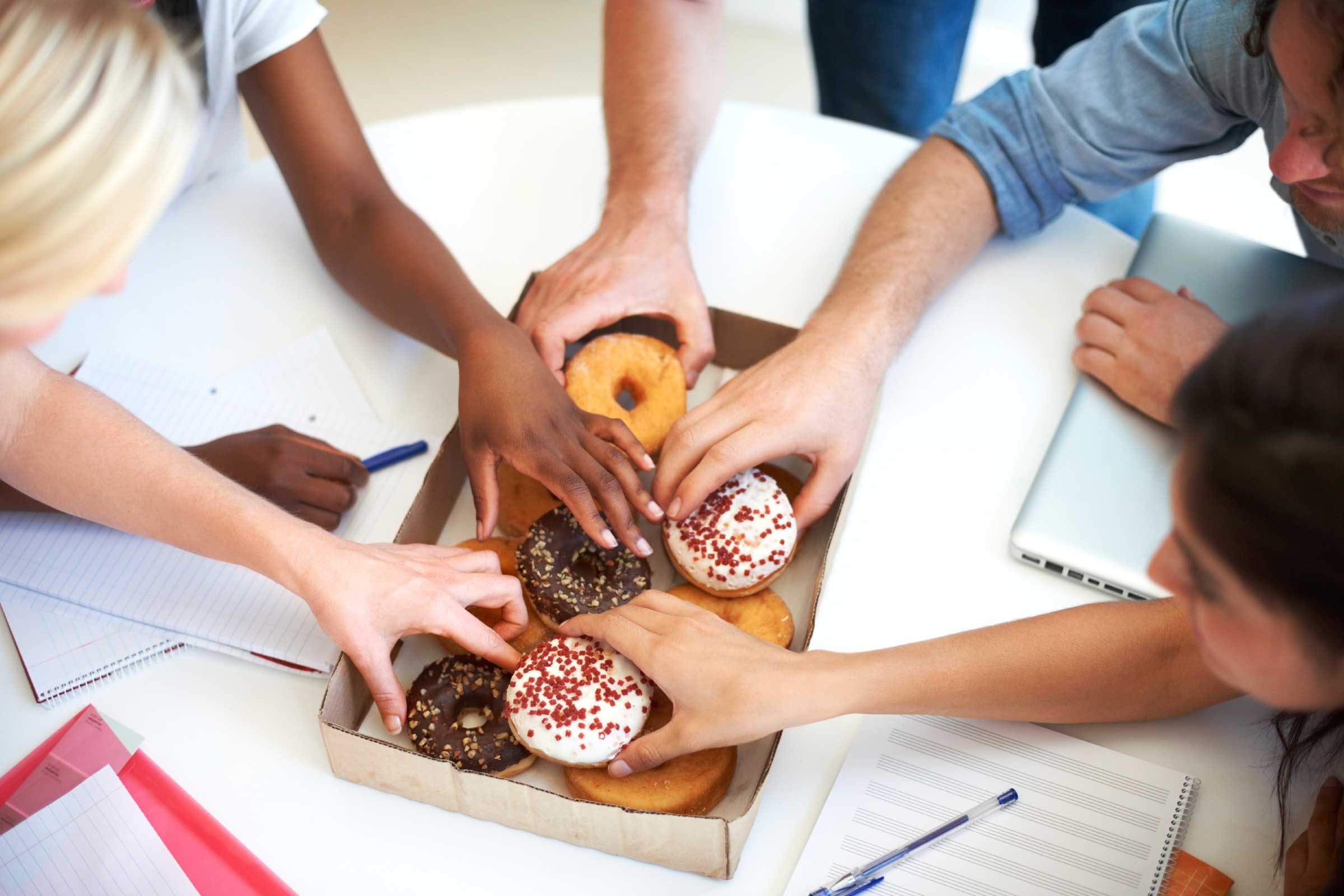
Rid your desk of those “emergency” sweets, suggests Lakatos Shames. Out of sight, out of mind. When you’re not surrounded by temptations, it’s much easier to stay away from foods that can lead to weight gain.

Stock up on healthy snacks


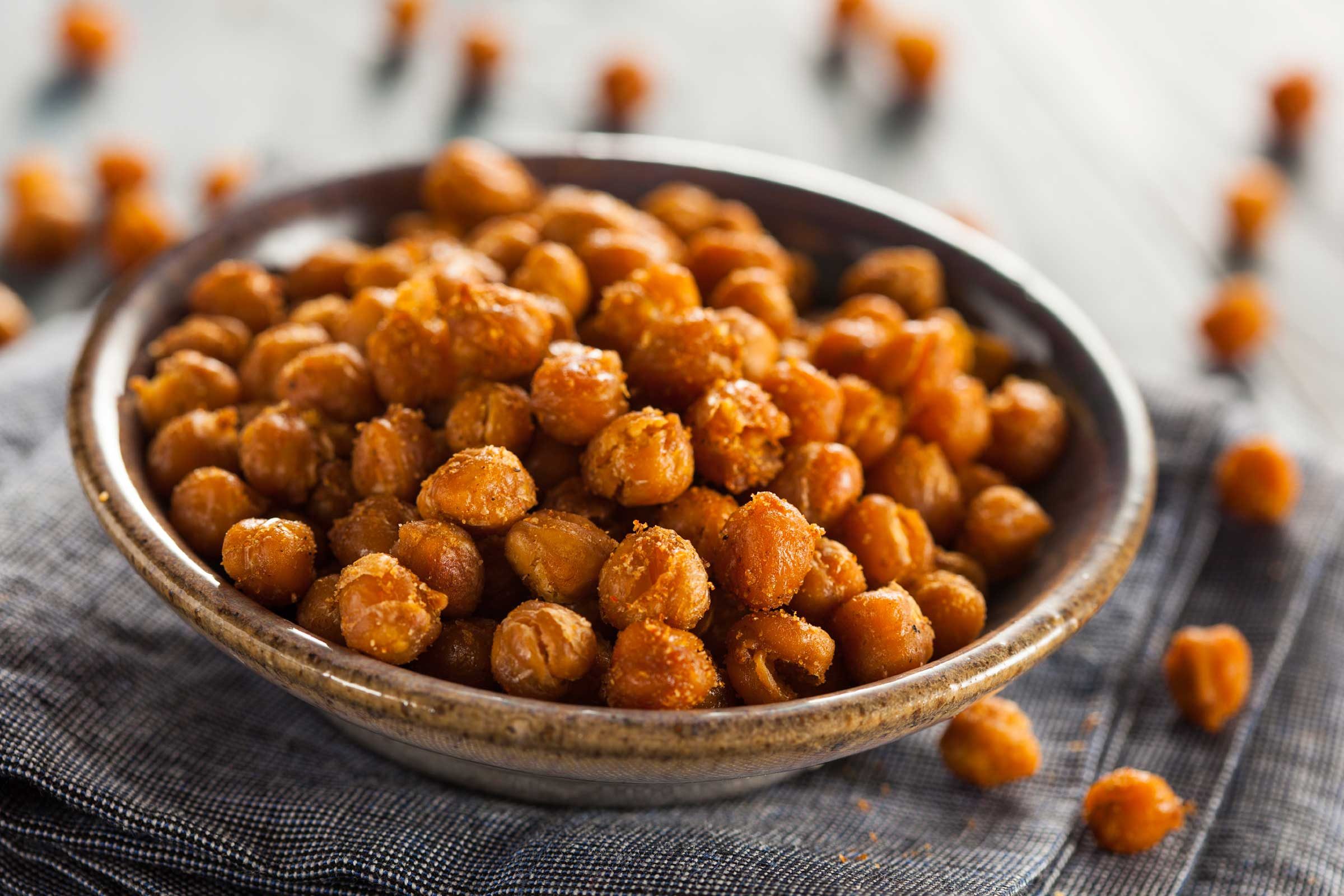
We’ve all had those days where a meeting runs way too long and you don’t have time to grab lunch. Your best bet to prevent a “hangry” (hunger + angry) episode: Rely on fiber-filled, protein-packed snacks that will keep you satisfied on relatively few calories, suggests Lakatos. Keep non-perishable snacks in your office drawer, like pre-portioned nut packs, or lower-sugar granola bars like KIND bars, roasted chickpeas, whole grain crackers, and even a small jar of peanut butter or almond butter. If you have access to an office fridge, stash these nutritious foods: apples, edamame, black bean dip or hummus for your crackers, non-fat yogurt topped with one tablespoon of granola, cucumber slices with low-fat cottage cheese, and raw, sliced veggies like carrots, peppers, and celery. We love these 31 healthy snacks for adults.

Drink plenty of naturally flavored water 


Flatten your belly by sipping water infusions throughout the day. The extra flavor will help if you’re sick of plain water and the combination of water and potassium from the fruit/herb/veggie infusions can help flush bloating culprits (like salt) from your system. Consider buying an infuser water bottle for your desk to which you add fruit or fresh herbs (find some on Amazon, Walmart, or Bed Bath & Beyond, to name a few). “When you’re properly hydrated you won’t make the common mistake of confusing thirst for hunger,” says Lakatos. “The extra fluid in your stomach can keep you feeling full.” The Nutrition Twins have a few favorite infusion recipes from their website: including Cucumber-Blueberry Water (8 ounces water, ¼ cup blueberries, ¼ cucumber, sliced), or their Lemon and Mint Detox Infusion that you can sip warm or cool (1 teaspoon grated ginger, slice up one lemon, several mint leaves, pour over 8 or 12 ounces water). These sneaky signs of dehydration mean you need to drink up.
Sip tea with lunch

Sip tea with lunch


Green, black, and oolong tea contain the amino acid theanine, which brings on a state of mental calmness yet alertness. This may help ease anxiety and prevent overeating due to emotional stress, while also making you very alert and mindful of your food choices. When you make good, healthy, rational meal decisions you stay leaner. These health benefits of tea are pretty mind-blowing.

Desk exercise: Zip up your abs


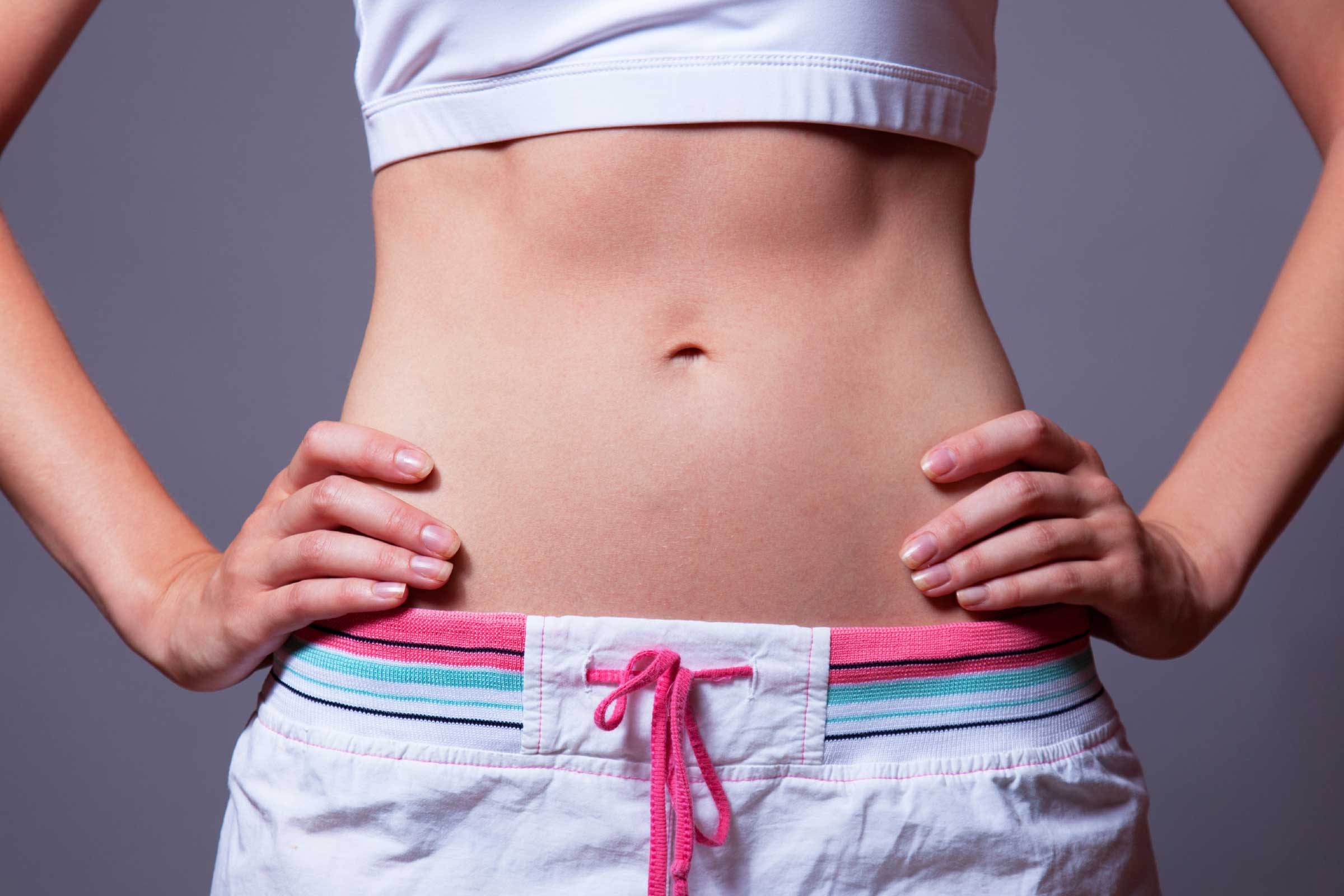
“We rely on this and it truly makes a huge flat-belly difference,” says Lakatos. Activate your abs by squeezing them in tight and pulling them back against your spine as you exhale. Picture zipping your abs together by using your muscles to contract your abs by pulling in from the center—think about pulling everything in a vertical line from your belly button up to between your breastbone, while also holding everything in and back toward your spine. Hold for a count of 10 as you continue to exhale. Slowly release and repeat for 10 reps at least three times. “Not only will this create good posture, it will also wake up the abs muscles and make it easier to keep your abs in,” says Lakatos Shames. Bonus: When you’re focusing on flat abs and a tight stomach you’re less likely to overeat at your desk. Here are 12 reasons your belly might be bloated.

Desk exercise: Tone your thighs


Try this thigh-toning exercise under your desk. (Beware wires and remove clutter first!) Stay seated with your feet on floor and back straight. Extend your right leg until it’s level with your hip, slowly lower. Repeat 10-15 times. Switch legs. You’ll feel the burn in your quadriceps.

Desk exercise: Strengthen your calves 


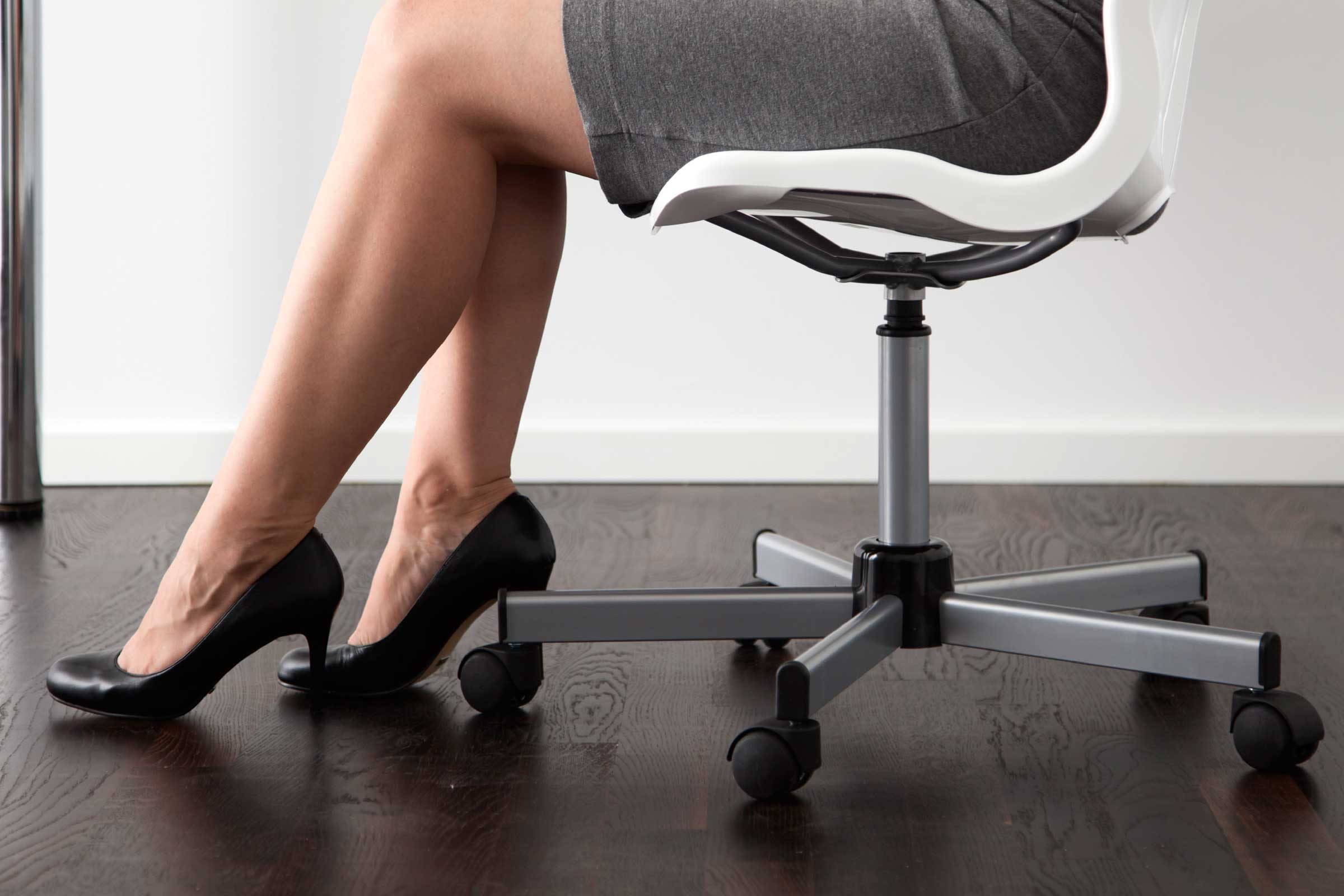
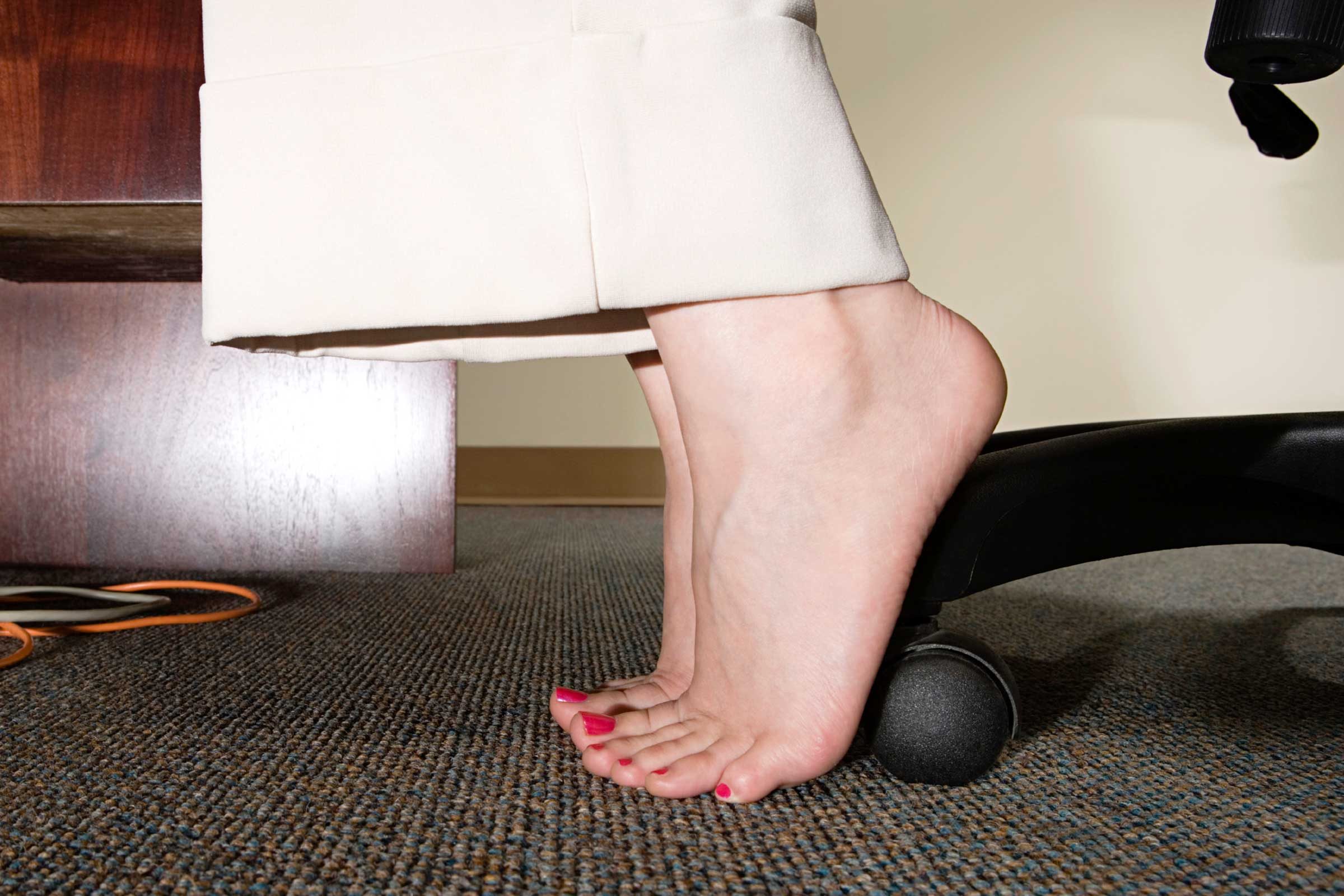
You can do this office exercise when you’re on the phone or doing something that doesn’t require you to write or participate beyond talking. Stand behind your chair, holding onto the back. Rest your right foot on back of your left lower leg. Do toe raises on your left foot. Switch sides. (If you’re in heels, remove them first.)

Desk exercise: Tighten and tone your butt 


Tense up gluteal muscles as you sit in your chair. Hold for 10 seconds. Do reps of 10 at a time. No one has to know you’re doing them.


Desk exercise: Jump-start digestion


Make your stomach flatter with this digestion exercise to stimulate peristalsis, the wave-like muscle contractions that move food through the digestive tract. Suck in your stomach as far as you can, then stick it out as far as you can. Breathe in when sucking in and breathe out when you push your stomach out. This small exercise helps blood flow to the stomach, aids in digestion, and exercises your abdominal muscles, says Lakatos Shames.

SOURCE BY : http://www.rd.com/health/diet-weight-loss/lose-weight-desk-exercises/

Monday, April 11, 2016

A Beginner's Guide To Healthy Fat Loss

You're ready to lose weight, but overwhelmed by complicated diet plans. Learn how to achieve your goals by focusing on what's absolutely necessary!

You may have heard some variation of this statement before: Your commitment to improved nutrition has to be a total, sustainable lifestyle change.

When people say this, they're often doing it with the best of intentions. They're trying to make eating better seem easier and more approachable. But what comes across is often the opposite. After all, there are an infinite number of nutrition-related variables you could change, and they would all impact your enjoyment, progress, and willingness to continue.

So let's break it down and focus on doing fewer things better. Here are four techniques you can use to make real progress without getting overwhelmed.


1.DON'T MICROMANAGE YOUR MACROS

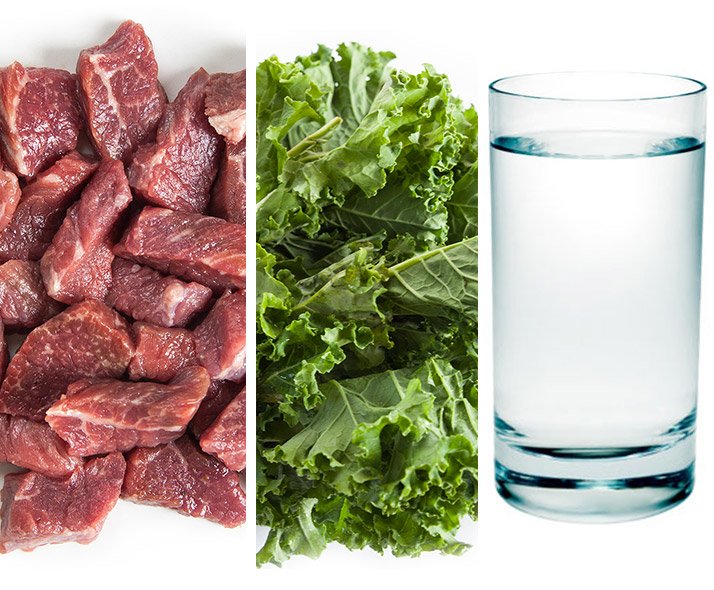
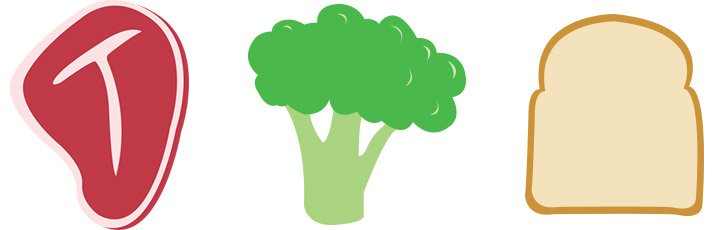
Repeat after me: protein, vegetables, water. If you forget everything else after reading this article, at least remember these three words. They're the nutritional foundation of fat loss.

Don't get me wrong—fat has its place, and it's an important one. But if your goal is to lose weight, eating more protein and vegetables and drinking more water are the priorities. Focus on getting more of all three, and you can solve a lot of problems.


Why? Let's break them down one at a time.

Protein: Aside from its ability to help you add muscle—which, in turn, helps to burn more fat—protein has several other benefits. It is slow to digest, which can help keep you feeling full throughout the day. It also has a high thermic effect, which means your body actually has to burn energy to digest and absorb protein. Yes, you understood that correctly: Protein can help keep you feeling fuller while eating less. To keep calories in check and encourage muscle-building at its highest, I recommend using lean animal proteins a majority of the time.

Veggies: After you're finished pummeling your protein, it's time to feast on veggies! Aside from the nutrient density and abundant antioxidants most vegetables have to offer, they also help to promote fullness due to their high water content. Fresh, frozen, or canned, each offers few calories per serving, which leads to larger portions and more fullness without the caloric overload or guilt trip.

SYMPTOMS OF DEHYDRATION

  • Hunger
  • Fatigue
  • Headaches
  • Lightheadedness
  • Trouble focusing
  • Irritability
  • Impaired short-term memory
  • Muscle cramps
  • Decreased speed and strength
  • Impaired reaction time
  • Symptoms can appear when you're dehydrated by as little as 3%!1,2


Water: With all of the hoopla around macronutrients, it's easy to forget that water is an essential nutrient, too. After all, we're at least 70 percent water, which means we're more water than protein! Aside from the cognitive and performance benefits associated with proper hydration, it's crucial to drink water consistently throughout the day to further promote fullness, prevent dehydration, and boost recovery from exercise. Of course, this calorie-free fluid also takes up ample space in your stomach, preventing you from trying to fill it with candy and cookies.

These priorities can even extend to the order in which you eat things on your plate. Try filling up on proteins and veggies first, with ample sips of water throughout the meal. If you still have room afterward, that's when to eat your carbs and fats.

2.FIX ONE MEAL AT A TIME

Look at some fitness-related Instagram feeds, and you might get the impression that you have to prep every meal every day to get results. You don't.

Identify the one meal that is the most troublesome for you each day. Maybe you often skip lunch because you're overloaded with meetings and projects all day, or you frequent the fast-food drive-thru for dinner on the reg. Maybe you still eat the breakfast of an overactive 6-year-old, and your wavering energy level throughout the day shows it. Tackle whatever meal gives you the most difficulty in consistently making sound nutritional choices.

First, make a plan. Plot out what you will eat for that specific meal each day of the week. Not just today, or tomorrow—every day of the week. If it's lunch or dinner, iron out your lean protein and vegetables (and carbohydrates, depending on the meal,) and decide which ones you will include in that meal. Maybe it's salmon and broccoli tomorrow, and grilled chicken with green beans the next.

Once you've got your foods picked, make the meal happen! Carve out the time to cook, portion, and pack the ingredients for this meal for the next few days. I'm not asking you to pack a week's worth of food, or even a day's worth—just one single meal per day.

If you can replace a few fast-food or vending-machine meals each week with some quality protein, vegetables, and water, that's a big step. You'll eliminate plenty of excess calories, improve your overall nutrition, and start building the habits that will lead to long-term progress.

3.LOOK FOR SIMPLE SWAPS

Steps 1 and 2 can be game-changers on their own, so by all means start there. Then, turn to the other caloric black holes that might be hiding in your life.

These don't always have to be attacked with the wholesale "replace a meal with a different meal" approach. Often, a simple ingredient swap can boost your intake of healthful nutrients while slashing fat and calories in half. You'd be surprised how effortlessly you can cut calories throughout your day. Here are a few places to start:

4.DON'T START TOO FAST

The biggest diet mistake is cutting calories too rapidly. This is because your metabolism is dynamic. It adapts to your current level of food intake and exercise, and it will respond to dramatic changes by trying to slow them down.

If you begin including regular exercise as well as reducing caloric intake by 1,000 or more calories per day, you will place your body in a rather large negative caloric balance. You're undoubtedly going to lose weight, and lose it fast. Initially, you may lose 2-5 pounds per week. However, this won't last.


Soon, your weight will plateau, and the next logical step is to further increase your treadmill time or to further reduce calories. But do this, and you'll only end up losing muscle and messing with your hunger-related hormones, both of which will do more harm than good to your results in the long term. It can also set you up for rapid weight gain when—not if—the hunger wins and you engage in an epic caloric splurge.

Losing 50 pounds isn't going to happen overnight, or in the next week, or even the next couple of months, and that's a good thing. That rate of loss wouldn't be sustainable, nor would it likely be healthy.

Here's what is healthy and sustainable: 1-2 pounds a week. Some weeks it will be more, some less. It probably won't be linear. But it's the rate to aim for, and it's how lasting change is achieved.

SOURCE BY : http://www.bodybuilding.com/fun/a-beginners-guide-to-healthy-fat-loss

Sunday, April 10, 2016

4 Tips For Sticking To Your Diet When Dining Out

Don't surrender your social life in an effort to eat clean. Learn how to navigate restaurant menus and stay on your diet while eating out!

Dieting doesn't have to mean skimping on romantic evenings out or losing time with family and friends. Instead of staying at home and missing out on a delicious restaurant meal, arm yourself with knowledge so you can be social and eat smart. Follow these four surefire tips to help you stick to your diet when dining out!

1.DON'T DRINK YOUR CALORIES

Cutting out soda, sweet tea, and alcohol is one of the simplest strategies to reduce overall calories when dieting. If you follow this tip at home, simply carry it with you to any restaurant meal. Choose calorie-free options such as water (bonus: this one is usually free!) or a diet beverage. Instead of blowing your calorie bank on liquids, save indulgences for the main course.


2.TAKE CONTROL OF YOUR MEAL

Too often, people are hesitant to speak up about their preferences when ordering at restaurants. Never feel obligated to accept a meal other than what you originally planned. While you might have to ask for off-menu replacements, you shouldn't settle for a meal that completely deviates from the one you planned. Take control of your meal using these simple methods:

PERSONALIZE PREPARATION METHODS

Restaurants are pretty good at offering low-fat cooking options such as baking, roasting, or grilling, but keep in mind that simply asking for something grilled may not be enough. Despite being grilled or roasted, steaks and fish are often cooked in butter—a noticeable flavor booster, but unnoticeable calorie-booster. Don't be afraid to ask the chef to hold the butter, skip the sauce, and bypass the oil so you can stay on track.

SKIP THE FREE OFFERINGS

Don't let the bread basket that greets you at the table be your downfall. Remember, snacking counts! Filling up on complimentary tortilla chips will still cost you calories. While it's easy to slowly nibble on these not-so-nutritious snacks, they disappear quickly, which can add unwanted calories fast. Take charge and simply inform your server ahead of time that you're not interested in the freebies. This will place the unnecessary calories out of reach.


MAKE THE MENU YOURS

Not digging the twice-baked-potato casserole that comes with the grilled sirloin? Maybe your mouth is watering over the quinoa salad served with the fresh catch of the day, but you're allergic to seafood. Rather than falling back to a simple grilled chicken breast and salad, speak up and ask the server specifically for what you want: the grilled sirloin and quinoa salad.

There's simply no reason why you shouldn't be able to order each item you want, even if what you're after isn't paired together on the menu. After all, the ingredients are sure to be on hand for both items. Take control of your meal and enjoy it.

3.EAT PROTEIN, VEGGIES, AND CARBS—IN THAT ORDER

You don't necessarily need to eat your macros in this order bite-for-bite, but you should focus primarily on consuming both your protein and vegetables before moving on to your carbohydrates.

Protein and high-fiber vegetables—sorry, mashed potatoes don't make the cut—help to slow down digestion, which leaves you feeling fuller, faster. By placing an emphasis on these two items from the start, you're less likely to overindulge in a creamy, sugary dessert because you're already full.

SUGARY DESSERT.

Your source of fat may come from your succulent steak, fresh vinaigrette, or even from sliced avocado. If you happen to have a healthy fat mixed in, go ahead and eat that in conjunction with the protein and veggies before thinking about crushing the carbs!

4.INSTILL PORTION CONTROL FROM THE START

From supersized and extra fries to all-you-can-eat extravaganzas, restaurants are quickly becoming patrons' favorite places, not only because of the dishes they serve, but because of the size of those dishes. Many people see it simply as "the bigger, the better." Sure, this nets you more bang for your buck, but if you're like many people and feel the urge to clean your plate(s), you're likely to hit your macros for the next three days all in one meal.

If you find yourself at a restaurant with oversized portions, request that a to-go box be brought out with your meal. This way, once your food arrives at the table, you can put away a portion for your next meal or two and focus on enjoying the amount at hand. Hey, it's like ordering two meals for the price of one!

SOURCE BY : http://www.bodybuilding.com/fun/4-tips-for-sticking-to-your-diet-when-dining-out


Friday, April 8, 2016

The 8 Most Underrated Fat-Loss Tips

If getting lean was as simple as exercising more and dieting, it would be easy. Don't overlook these 8 critical but underrated factors in losing fat.
It's hard not to hear the voices. With so many Americans overweight—about two-thirds of us, actually—we're constantly bombarded with messages to lose weight.


But you've already heard that. And you've already heard that diet and exercise are the keys. Yet sometimes making the right choices when it comes down to the nitty-gritty of implementing a fat-loss plan can be confusing, especially when some of the recommendations seem counterintuitive. Like the idea that moderate-rep resistance training is better for far loss than using a lighter weight for more reps.

Let's dispense with what you already know about fat loss and focus on what you don't know. Grasp these eight underrated fat-loss tips and you'll be that much closer to beginning—and completing—your own transformation.

UNDERRATED TIP 1 DON'T TRADE MODERATE WEIGHTS FOR LIGHTER ONES

Resistance training is an important component of a successful fat-loss strategy, but choosing a lighter weight in order to do more reps is a mistake. Maintaining or encouraging muscle growth while trying to lose fat is important because muscle tissue is metabolically active, meaning it burns a greater number of calories all day long, even when you're at rest.

To build and retain as much muscle tissue as possible while dieting, train with moderately heavy weight in the 8-12-rep range. Light weight—even when done for more reps—doesn't encourage maximal muscle size.

But that's not all. Lifting with moderately heavy weight does a better job of elevating your metabolism for up to 24 hours after your workout. This effect—called excess post-exercise oxygen consumption, or EPOC—burns significantly more calories than a workout using lighter weight. So just because you may be able to do more reps with a lighter weight doesn't mean you're achieving a greater benefit.

Stick with multijoint movements (squats, bench presses, rows, etc.), which are the most energy demanding because they require multiple muscle groups to work in coordination. These types of moves also better trigger your natural release of testosterone and growth hormone, both of which help you maintain and build muscle mass.

If you're looking to increase your intensity and burn more calories, try supersets in which you do two exercises back to back without resting until you complete both movements. This will keep your heart rate elevated and shorten the length of your workout.

UNDERRATED TIP 2 BURN MORE BODY FAT WITH HIIT CARDIO TRAINING

While jumping on the bike or treadmill for 20-30 certainly can't hurt, not all cardio strategies are created equal. A leisurely, low-intensity approach is comfortable, of course—it gives you a chance to catch up on your favorite TV shows—but you can burn significantly more body fat in the same amount of time with high-intensity interval training (HIIT).1,2 HIIT allows you to burn more calories both during the activity period and afterward, thanks to the EPOC mechanism.

As the name suggests, HIIT is an intense method of training that alternates short bouts of near-maximal cardio activity (30 seconds) with less-intense recovery intervals (about 30-60 seconds). As your fitness improves, lengthen the work interval and shorten the recovery period.

HIIT can be done using just about any cardio apparatus, or even outdoors with sprints. Do it 2-3 times a week for about 30 minutes per session.

UNDERRATED TIP 3 KEEP MOVING BETWEEN SETS

If you want to burn more fat and improve recovery, what you do during that 2-3-minute rest interval between sets can make a big difference. A 2008 UC Santa Cruz study showed that individuals who completed 30-60 seconds of cardio between sets of weights enhanced post-workout recovery and improved recovery between sets.3

Jim Stoppani, PhD, author of "Jim Stoppani's Encyclopedia of Muscle & Strength," calls this method cardioacceleration, and his recommendation is to do 30-90 seconds of high-intensity cardio activity between sets of regular weight training.4 By the end of your workout, you'll have completed a full cardio session of high-intensity cardio, similar to a HIIT session, without adding time to your overall training session.

This type of activity doesn't require a treadmill or cardio machine, but can instead be done with activities like bench step-ups, dumbbell cleans, or even running in place. Start with 30 seconds of activity and build up in 15-second increments as you improve. Whatever you do, don't just sit there!

UNDERRATED TIP 4 DINE OUT LESS FREQUENTLY

Today, Americans eat out almost twice as often as they did 30 years ago. While you can make healthy choices when eating out, research indicates just how hard that is to do. A study published online at Public Health Nutrition found that those who cook dinners at home no more than once a week ate 137 calories a day—about 6.3 percent—more than those who cooked dinner at home 6-7 times a week.5 By dining at home, you'll save money and have more control over the ingredients you use. Restaurants also tend to serve larger portion sizes.

UNDERRATED TIP 5 ALWAYS EAT SOMETHING BEFORE YOU HEAD OUT

Here's a dietary sin you've probably committed: going grocery shopping while hungry. Cravings affect your choices, and you end up with a bagful of junk foods you otherwise wouldn't have bought. By eating before you leave the house, making smart decisions becomes much easier.

The mall, the movie theater, parties, and barbecues can also be diet saboteurs. Whenever possible, have a healthy meal or snack beforehand, to help you avoid temptation. That way I'm not hungry enough to give into the temptations of buttery popcorn or other junk. It's much easier to resist impulsive choices of nutritionally empty foods when you're belly isn't likewise empty.

UNDERRATED TIP 6 SUBSTITUTE VEGGIES FOR GRAINS

If you're a meat-and-potatoes kind of guy, you can easily justify those foods for the protein and starchy carbs they provide to fuel muscle growth. But if you're looking to get leaner, reduce your carb intake by simply substituting a veggie for a complex or starchy carb. This will save you a handful of calories every time you make the switch.

Try a salad with a low-cal dressing instead of mashed potatoes, or eat your grilled chicken sandwich without the bun and add a couple of tomatoes slices. Non-starchy veggies help fill you up while adding minimal calories.

UNDERRATED TIP 7 REPLACE FRUIT JUICES AND OTHER BEVERAGES WITH WATER

Would you believe that about 37 percent of your daily calories have been hiding in sodas and fruit juices?6 That's pretty sobering news—and an opportunity to make a big dent in your daily totals.


Cut out a slew of calories from the worst kind of sources—sugary drinks and fructose that spike insulin levels—by drinking water instead. If that's not flavorful enough, squirt Mio or Crystal Light into you water bottle to add flavor, and drink up.

Sugar-free alternatives are better for your waistline than sugary drinks, so long as you don't assume that diet colas allow you to consume more calories elsewhere in your diet.

UNDERRATED TIP 8 GET ON A ROLL

I find it easier to stick with a program when I'm fully committed to it. I don't have a problem with commitment, but like most people, I have a problem getting started. But after following a plan for a few days, making the right choices becomes easier.

Getting back on the wagon after falling off is tough. One trick I've found that works for me is to start my week on Sundays, not Mondays. The gym isn't crowded, and I'm not rushed at home, so I can eat when and what I want. When Monday's chaos inevitably arrives, I've already got a perfect day under my belt, so I'm less likely to blow off my training or grab a fast-food meal. String together a couple of good days, and your chances of success skyrocket.


SOURCE BY: http://www.bodybuilding.com/fun/the-8-most-underrated-fat-loss-tips.html

Tuesday, April 5, 2016

7-Day Diet Meal Plan to Lose Weight: 1,200 Calories

A delicious way to lose weight.

This 1,200-calorie meal plan is designed by EatingWell's registered dietitians and culinary experts to offer healthy and delicious meals for weight-loss. We've done the hard work of planning for you and mapped out seven full days of meals and snacks. The calorie totals are listed next to each meal so you can easily swap things in and out as you see fit. Note, this meal plan is controlled for calories, fiber and sodium. If a particular nutrient is of concern, consider speaking with your health care provider about supplementation or altering this plan to better suit your individual nutrition needs.

Day 1


Breakfast (266 calories)
Avocado-Egg Toast
• 1 slice whole-grain bread
• 1/4 medium avocado
• 1 large egg, cooked in 1/4 tsp. olive oil or coat pan with a thin layer of cooking spray (1-second spray)
• Top egg with a pinch of salt and pepper (1/16 tsp. each)
• 1 clementine

Morning Snack (61 calories)
• 1/3 cup blueberries
• 1/4 cup plain non-fat Greek yogurt

Top blueberries with Greek Yogurt

Lunch (341 calories)
• 1 serving Ravioli & Vegetable Soup
• 1 serving Tomato-Cheddar Cheese Toast

Afternoon Snack (93 calories)
• 3 Tbsp. hummus
• 1 cup sliced cucumber

Dinner (451 calories)
Salmon & Vegetables
• 4 oz. baked salmon
• 1 cup roasted Brussels sprouts
• 1/2 cup brown rice
• 1 Tbsp. walnuts
• Salt and pepper to taste (1/8 tsp. each)
Vinaigrette
• Combine 1 1/2 tsp. each olive oil, lemon juice and maple syrup; season with salt to taste (1/8 tsp.).

Coat Brussels sprouts in 1/2 tsp. olive oil and bake at 425 degrees F until lightly browned, about 15-20 minutes. Coat salmon with 1/4 tsp. olive oil or a thin layer of cooking spray (1 second spray), add salt and pepper to taste (1/8 tsp. each). Bake at 425 degrees F until done, about 4-6 minutes. Serve brown rice, Brussels sprouts and salmon drizzled with vinaigrette and topped with walnuts.


Day 2


Breakfast (266 calories)
Avocado-Egg Toast
• 1 slice whole-grain bread
• 1/4 medium avocado
• 1 large egg, cooked in 1/4 tsp. olive oil or coat pan with a thin layer of cooking spray (1 second spray)
• Top egg with a pinch of pepper (1/16 tsp.)
• 1 clementine

Morning Snack (134 calories)
• 5 dried apricots
• 7 walnut halves

Lunch (295 calories)
Leftover soup
• 1 serving Ravioli & Vegetable Soup
• 1 clementine

Afternoon Snack (93 calories)
• 3 Tbsp. hummus
• 1 cup sliced cucumber

Dinner (424 calories)
• 1 serving Delicata Squash & Tofu Curry
• 1/2 cup brown rice

Day 3


Breakfast (267 calories)
• 1/2 serving (1/4 cup) Maple-Nut Granola
• 3/4 cup plain non-fat Greek yogurt
• 1/2 cup blueberries

Morning Snack (35 calories)
• 1 clementine

Lunch (351 calories)
Apple & Cheddar Pita Pocket
• 1 whole-wheat pita round (6-1/2-inch)
• 1 Tbsp. mustard
• 1/2 medium apple, sliced
• 1 oz. Cheddar cheese
• 1 cup mixed greens

Cut pita in half and spread mustard inside. Fill with apple slices and cheese. Toast until the cheese begins to melt. Add greens and serve.

Afternoon Snack (47 calories)
• 1/2 medium apple

Dinner (457 calories)
• 1 serving Moroccan-Style Stuffed Peppers
• 2 cups spinach

Sauté spinach in 1 tsp. of olive oil and a pinch of both salt and pepper (1/16 tsp. each)

Evening Snack (50 calories)
• 1 Tbsp. chocolate chips, preferably dark chocolate


Day 4


Breakfast (267 calories)
• 1/2 serving (1/4 cup) Maple-Nut Granola
• 3/4 cup plain non-fat Greek yogurt
• 1/2 cup blueberries

Morning Snack (83 calories)
• 1 hard boiled egg
• 1 tsp. hot sauce, if desired

Lunch (336 calories)
• 2 cups mixed greens
• 3 oz. cooked chicken breast
• 1/2 medium red bell pepper, sliced
• 1/4 cup grated carrots
• 1 clementine
• 1 serving (2 Tbsp.) Carrot-Ginger Vinaigrette

Combine ingredients & top salad with vinaigrette.

Afternoon Snack (86 calories)
• 4 dried apricots
• 4 walnut halves

Dinner (444 calories)
• 1 serving Warm Lentil Salad with Sausage & Apple
• 1 serving Quick Pickled Beets

Day 5


Breakfast (266 calories)
• 1 cup all-bran cereal
• 3/4-cup skim milk
• 1/2 cup blueberries

Morning Snack (101 calories)
• 2 medium carrots
• 1 serving (2 Tbsp.) Avocado-Yogurt Dip

Lunch (314 calories)
• 1 serving Tomato-Cheddar Cheese Toast
• 2 cups mixed greens
• 3 Tbsp. grated carrot
• 1/2 cup cucumber, sliced
• 1 hard-boiled egg
• 1 Tbsp. unsalted dry-roasted almonds
• 1 1/2 tsp. each olive oil & balsamic vinegar

Top greens with grated carrot, cucumber, hard-boiled egg, almonds and balsamic vinaigrette.

Afternoon Snack (93 calories)
• 3 dried apricots
• 1/3 cup plain non-fat Greek yogurt
• 1 1/2 tsp. chopped walnuts

Top Greek yogurt with chopped apricots and walnuts

Dinner (427 calories)
• 1 serving Quick Chicken Tikka Masala
• 1/2 cup brown rice

Day 6


Breakfast (266 calories)
• 1 cup all-bran cereal
• 3/4-cup skim milk
• 1/2 cup blueberries

Morning Snack (66 calories)
• 1 serving (2 Tbsp.) Avocado-Yogurt Dip
• 1 cup sliced cucumber

Lunch (325 calories)
Leftover Chicken Tikka Masala
• 1 serving Quick Chicken Tikka Masala
• 1 cup spinach

Reheat the chicken on top of the spinach in the microwave.

Afternoon Snack (35 calories)
• 1 clementine

Dinner (507 calories)
• 1 serving Korean Beef Stir-Fry
• 1/2 cup, cooked buckwheat soba noodles (about 1 ounce dry noodles)


Day 7


Breakfast (266 calories)
• 1 cup all-bran cereal
• 3/4-cup skim milk
• 1/2 cup blueberries

Morning Snack (117 calories)
• 2 serving (4 Tbsp.) Avocado-Yogurt Dip
• 1 cup sliced cucumber

Lunch (301 calories)
• 2 cups mixed greens
• 3 oz. cooked chicken breast
• 1/2 medium red bell pepper, sliced
• 1/4 cup grated carrots
• 1 serving (2 Tbsp.) Carrot-Ginger Vinaigrette

Combine ingredients and top the salad with vinaigrette.

Afternoon Snack (42 calories)
• 5 dried apricots

Dinner (494 calories)
• 1 serving Wild Mushroom Pizza with Arugula & Pecorino

sources by : http://www.eatingwell.com/nutrition_health/weight_loss_diet_plans/diet_meal_plans/7_day_diet_meal_plan_to_lose_weight_1200_calories

Friday, April 1, 2016

What Are the Best Ways to Decrease Your Body Fat Percentage ?

Decreasing your body fat percentage can help you look leaner, feel healthier and perform better in sports. As you lose excess storage fat and put on more muscle, your body fat percentage will gradually drop. How hard you'll need to work to reach your goal depends on how much fat you have to lose and how low you want your body fat level to be.


Understanding Body Fat

Carrying too much fat puts you at risk for chronic illnesses such as heart disease and type 2 diabetes. For men, a healthy body fat percentage is between 11 and 22 percent; for women, it's between 22 and 33 percent. Athletes and fitness enthusiasts may have even lower levels, because of the demands of their sport and because of their desire to look exceptionally lean. No official guidelines for percentage of body fat exist, because body fat levels depend on genetics, age and gender. Fitness or health organizations publish ranges that may differ slightly from these, but those ranges will let you know if you're generally in the overweight range, the healthy range or the athletic range.

When setting goals for your body fat levels, keep in mind that men must carry from 2 to 5 percent essential fat to support optimal body function. Women have a slightly higher minimum requirement, of 10 to 13 percent of fat, to support pregnancy and childbirth.

Initiating Fat Loss

You'll start to burn fat stores when your calorie intake drops below what your body needs to maintain itself. Find an online calculator that will help you figure out your daily calorie needs, then subtract 500 to 1,000 calories from your original number. The new, lower calorie total will help you lose 1 to 2 pounds per week. At this rate, you can expect to lose about 1 percent of your body fat a month. If you want professional advice about your calorie needs, speak with a dietitian. Remember, don't reduce your calorie intake below 1,200 calories or you'll risk becoming nutritionally deficient and losing lean muscle mass.

Making simple changes -- such as avoiding soda, alcohol, sugary treats and processed snacks -- goes a long way toward helping you reduce your body fat. Add a daily walk or other cardiovascular exercise to burn even more calories.

In addition to cardio, try strength training. Engaging in two weight training sessions a week will build muscle mass on your frame to increase the amount of lean tissue you carry. Start with body weight exercises, such as squats and pushups, and as you feel stronger, add resistance from machines, free weights or resistance tubing. Each workout should include at least one set of eight to 12 repetitions of an exercise for each major muscle group.

Decreasing Body Fat Percentage Further

When you're already at a healthy body fat level but want to become even leaner so your muscles look more defined and you feel fitter, make additional changes to your diet and exercise plan. For example, as a man, your goal might be to go from 18 percent body fat to around 14; as a woman, your goal might be to go from 28 body fat to about 22 percent.

Continue to maintain a calorie deficit and focus more diligently on portion sizes and on the types of foods you choose. At most meals, eat a palm-sized portion of lean protein that's baked, stir-fried or grilled, along with a small fistful of whole grains and a generous handful or two of watery, fibrous vegetables. Make your snacks consist of healthy whole foods such as low-fat yogurt or fruit. Limit restaurant visits to once or twice a week and make the healthiest choices you can. Keep your intake of treats, alcohol and sugary beverages to a minimum.

Plan to exercise most days for 30 to 45 minutes. Include higher intensity cardio, such as running and interval training, during which you alternate blocks of high-intensity work with short rest periods.

Increase your strength-training schedule to three or four days a week on non-consecutive days. Do three to six sets of eight to 12 repetitions of compound movements such as back squats, chest presses and deadlifts. Use resistance that feels quite heavy by the last couple of efforts.

Achieving "Athlete" Level Body Fat

Fitness models, exercise enthusiasts and athletes have body fat levels that range from 6 to 13 percent for men and 13 to 20 percent for women. These lower body fat levels may help you feel lighter out on the field, flex more impressively on stage and look exceptionally fit.

To achieve such low levels of body fat, you must adhere to strict dietary guidelines and strict exercise regimens. Workouts last 60 to 90 minutes on most days. You'll need to participate in interval training two to three times a week, and you'll need to lift heavy weights for three to six sessions a week. Likely, you'll do multiple exercises for each muscle group; for example, you'll do flyes, presses and pushups for the chest and rows, pull ups and pullovers for the back.

Plan your portions of carbohydrates, protein and fats carefully. At meals, eat 20 to 30 grams of protein with only 1/2 to 1 cup of whole grains or starchy vegetables, a teaspoon of healthy fat and an ample amount of leafy vegetables. Post-workout protein snacks are critical to help you become stronger and recover more quickly to enable you to hit the gym again the next day. Each snack should contain 20 grams of protein and some healthy carbohydrates. Examples of these snacks are whey protein mixed with milk and fresh fruit or one half of a turkey sandwich on whole-wheat bread.


Lifestyle Habits to Help You Lose Fat

Adequate rest and recovery is critical, regardless of how much body fat you aim to lose. Plan to get seven to nine hours of quality sleep a night, as sleep is the prime time to release the hormones responsible for muscle growth and repair. Good sleep habits also keep your hunger levels in check and maximize your daytime energy levels so your workouts can be spot on.

How you deal with stress -- whether the stress is from work deadlines, financial problems or family issues -- will influence your output of the hormone cortisol. Releasing excessive amounts of cortisol, which happen when you feel stressed and overwhelmed, makes you crave fatty, sugary foods so it becomes difficult to stick to your eating plan. Cortisol can also cause your body to hold on to extra pounds. To lose body fat, learn to deal with stress constructively such as by participating in calming activities like yoga, meditation or journaling.


Source by :- http://www.livestrong.com/article/240209-best-way-to-lose-body-fat-percentage/